
When someone in your building dials 911, what do you actually know?
If you’re like most organizations, the answer is: almost nothing. You might receive an alert that a call was placed. You might know which phone initiated it. If your system is well-configured, you might even know which floor and room.
But here’s what you don’t know: Is it a heart attack or a fire? An active threat or a false alarm? Is the caller conscious? Are there injuries? Is the situation escalating?
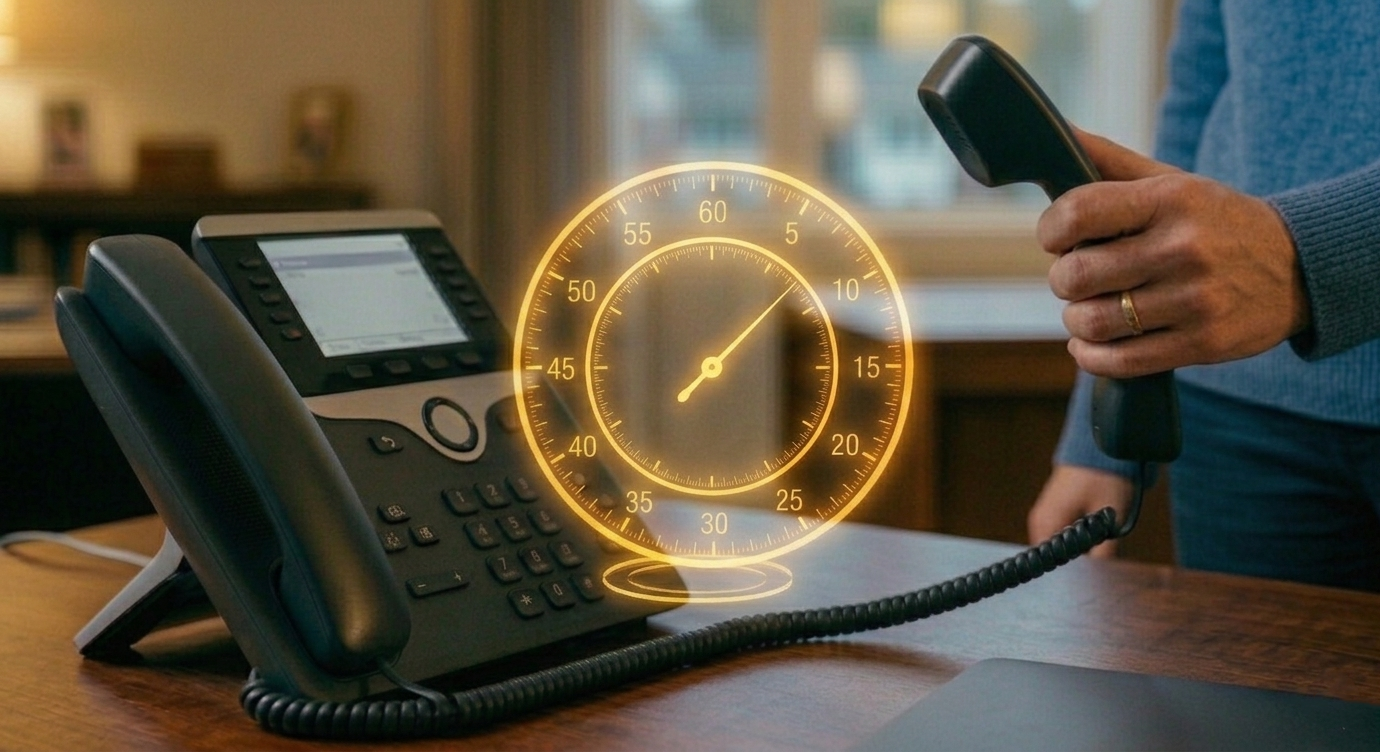
For the first 60 seconds of every 911 call, your organization operates in the dark. And in emergencies, those 60 seconds determine everything that follows.
The Anatomy of a 911 Call
To understand the gap, you need to understand what actually happens when someone dials 911 from an enterprise phone system.
Second 0-5: The call initiates. Your phone system routes it to the appropriate Public Safety Answering Point based on the caller’s registered location. If you have on-site notification configured, an alert fires to your security desk, facilities team, or designated responders.
Second 5-15: A 911 dispatcher answers. They begin asking questions: What’s your emergency? What’s your location? Are you safe? The caller starts explaining what’s happening.
Second 15-45: The dispatcher gathers critical information. Nature of the emergency. Number of people involved. Whether weapons are present. Medical conditions. Ongoing threats. This information determines which responders are sent and how they approach the scene.
Second 45-60: The dispatcher begins coordinating response. Police, fire, EMS—whoever’s needed—receives initial dispatch with the information gathered so far. The clock starts on physical response time.
Here’s the problem: During this entire first minute, your organization’s involvement ends at “alert sent.” The conversation between caller and dispatcher—the actual intelligence about what’s happening in your building—flows directly to the PSAP. Your security team, your facilities managers, your executives have no visibility into it.
What Your Team Actually Sees
Let’s make this concrete. Imagine it’s 2:30 PM on a Tuesday. Your security desk receives a 911 notification:
911 CALL INITIATED — Building A, Floor 3, Room 312 — Extension 4587
That’s it. That’s everything you know.
Is Room 312 a conference room with 20 people in a meeting? A single-occupancy office? A storage closet someone ducked into to make a private call? Your notification doesn’t tell you.
Is this a medical emergency where you should send your AED-trained staff? A fire where you should begin evacuation? A violent situation where approaching the room could put your team at risk? You don’t know.
Your security officer now faces a choice: rush to the location with no information, potentially walking into a dangerous situation unprepared—or wait for clarity that may never come, losing precious minutes.
Most choose to respond immediately, because waiting feels wrong. But responding blind isn’t response—it’s reaction. And reaction without information can make things worse.
The Information Asymmetry Problem
Consider the asymmetry: Within 30 seconds of that call, the 911 dispatcher knows the nature of the emergency, the number of people involved, whether there are weapons or fire or medical distress, and whether the situation is escalating or contained.
Your organization—the people physically closest to the emergency, the ones who could provide immediate assistance, the ones responsible for everyone else in the building—knows none of this.
This isn’t a technology failure. It’s a structural gap in how 911 systems were designed. The 911 infrastructure was built to connect callers with dispatchers and dispatchers with first responders. Organizations that host the emergencies were never part of the information flow.
Fifty years ago, this made sense. The telephone company owned the phone, and 911 was a public service. The organization’s role was to have a phone and an address.
But organizations today aren’t passive hosts. They employ security teams, maintain emergency response plans, stock medical equipment, conduct active shooter training. They’ve invested heavily in being prepared. Yet when an actual emergency occurs, they’re cut off from the one source of information that matters most: what’s happening right now.
Why the First 60 Seconds Matter Most
Emergency response research consistently shows that outcomes depend heavily on what happens in the first minutes. The “golden hour” in trauma care starts the moment injury occurs, not when paramedics arrive. Cardiac arrest survival rates drop roughly 10% for every minute without intervention. Building fires double in size every 60 seconds.
But the first 60 seconds matter for another reason: they determine how everyone else in the building responds.
If your security team knows immediately that there’s a medical emergency on Floor 3, they can grab the AED and start heading there while also alerting the Floor 3 receptionist to meet them. They can clear the elevator. They can have someone waiting at the building entrance to guide paramedics directly to the right location.
If they know there’s a fire, they can initiate evacuation protocols for the affected area, activate fire suppression conversations, unlock stairwell doors, and ensure fire lanes are clear for trucks.
If they know there’s an active threat, they can initiate lockdown, alert other floors to shelter in place, coordinate with arriving police on threat location and description, and keep people away from danger.
Without that information, none of this happens. Your team responds generically—or worse, they respond inappropriately for the situation. Running toward a medical emergency is heroic. Running toward an armed intruder without knowing they’re armed is catastrophic.
The Gap in Today’s Solutions
The E911 industry has made enormous progress over the past decade. Location accuracy has improved dramatically. On-site notification is now standard. Integration with mass notification systems allows organizations to alert entire populations when emergencies occur.
But all of these solutions share a common limitation: they tell you that a 911 call happened. They don’t tell you what the emergency actually is.
This isn’t a criticism—it’s a description of the problem space these solutions were designed to address. Kari’s Law and Ray Baum’s Act focus on ensuring 911 calls connect and deliver accurate location. They don’t address information flow back to the organization.
And so organizations find themselves in a strange position: fully compliant with 911 regulations, equipped with sophisticated notification systems, staffed with trained responders—and still blind to what’s actually happening when emergencies occur.
The Dispatcher Bottleneck
Some organizations try to bridge this gap by calling the PSAP during emergencies. If a 911 notification fires, security calls the dispatch center to ask what’s happening.
This rarely works well. Dispatchers are managing multiple emergencies simultaneously. Confirming who’s calling, verifying their authority to receive information, and relaying details takes time—time that’s being measured against someone’s survival.
More fundamentally, this approach inverts the information flow. Instead of intelligence automatically reaching the people who need it, those people must actively seek it out while simultaneously trying to respond to an emergency. It adds cognitive load at exactly the moment when focus matters most.
What Would Change With Real-Time Intelligence
Imagine a different scenario. Same 911 call from Room 312. But instead of just a notification, your security team sees:
911 CALL — Building A, Floor 3, Room 312
MEDICAL — Cardiac event — Male, 50s — Conscious but in distress — No breathing difficulty reported
Now your response changes completely. You know to bring the AED. You know to send someone trained in cardiac response. You know the person is conscious, so you can prepare for interaction rather than CPR. You know it’s not a threat situation, so you can move quickly without tactical caution.
You’ve gained 60 seconds of intelligence that would otherwise take 60 seconds to acquire—time that directly translates to better outcomes.
This isn’t a hypothetical capability. It’s exactly what 9Line’s Echo was built to deliver—and right now, it’s the only solution on the market doing it. The information exists—it’s flowing between caller and dispatcher in real time. Echo intercepts that stream, transcribes it instantly, and surfaces the intelligence your team needs before first responders even arrive on scene. No other enterprise 911 solution does this.
The Coming Shift
The 911 industry is beginning to recognize this gap. Next-generation 911 (NG911) initiatives include provisions for richer data exchange and broader stakeholder access. Some forward-thinking PSAPs are exploring ways to share real-time information with registered enterprise partners.
But infrastructure change is slow. Most organizations can’t wait for national standards to evolve. They need solutions that work with existing 911 infrastructure while bridging the information gap.
That’s the problem 9Line is building Echo to solve—and Echo is the only solution in the market doing it. Echo combines real-time voice-to-text transcription with natural language processing and keyword alerting to extract and classify emergency details as the 911 conversation unfolds—then pushes that intelligence instantly to the right people in your organization. No manual monitoring. No dispatcher callbacks. No guessing. No other enterprise 911 platform offers real-time transcription and keyword alerting from live 911 calls.
That gap is exactly what 9Line’s Echo closes—and today, Echo is the only solution in the enterprise 911 space offering real-time call transcription and keyword alerting. The question isn’t whether organizations will gain access to real-time 911 intelligence—it’s how quickly they’ll adopt it, and whether they’ll be among the leaders or the laggards when the next emergency occurs.
Conclusion
The first 60 seconds of a 911 call contain everything your organization needs to respond effectively: the nature of the emergency, its severity, whether it’s escalating, what resources are required, and what dangers responders might face.
Today, that information flows past you to the dispatcher, and you’re left with nothing but a notification that a call occurred.
That gap—between knowing a 911 call happened and knowing what the emergency actually is—represents the next frontier in enterprise emergency response. Organizations that close it will respond faster, more accurately, and with better outcomes.
Organizations that don’t will keep reacting in the dark, hoping their generic response happens to fit the specific emergency they’re facing.
In emergencies, hope isn’t a strategy. Information is. Echo from 9Line delivers that information—in real time, from the moment the 911 call begins. It’s the only solution capable.
Learn more by visiting 9line.net/echo.