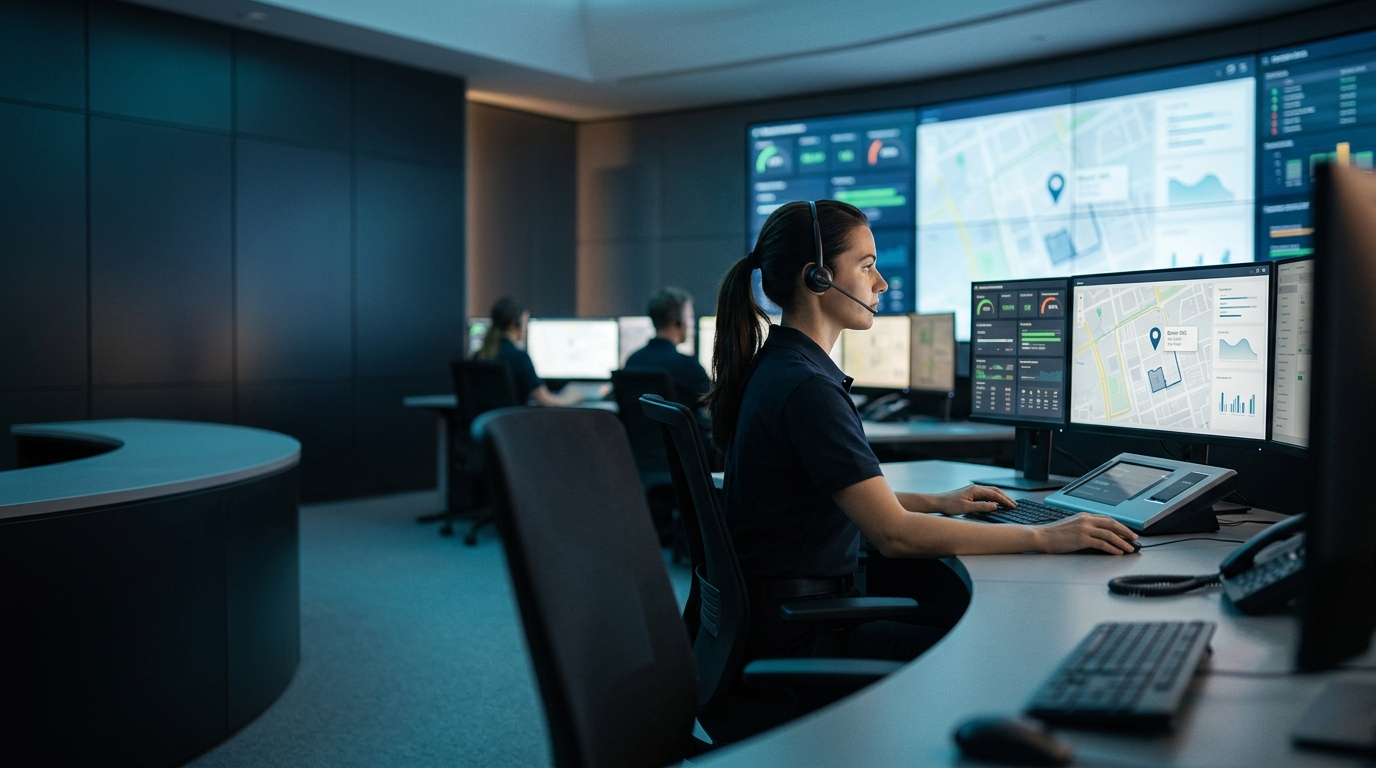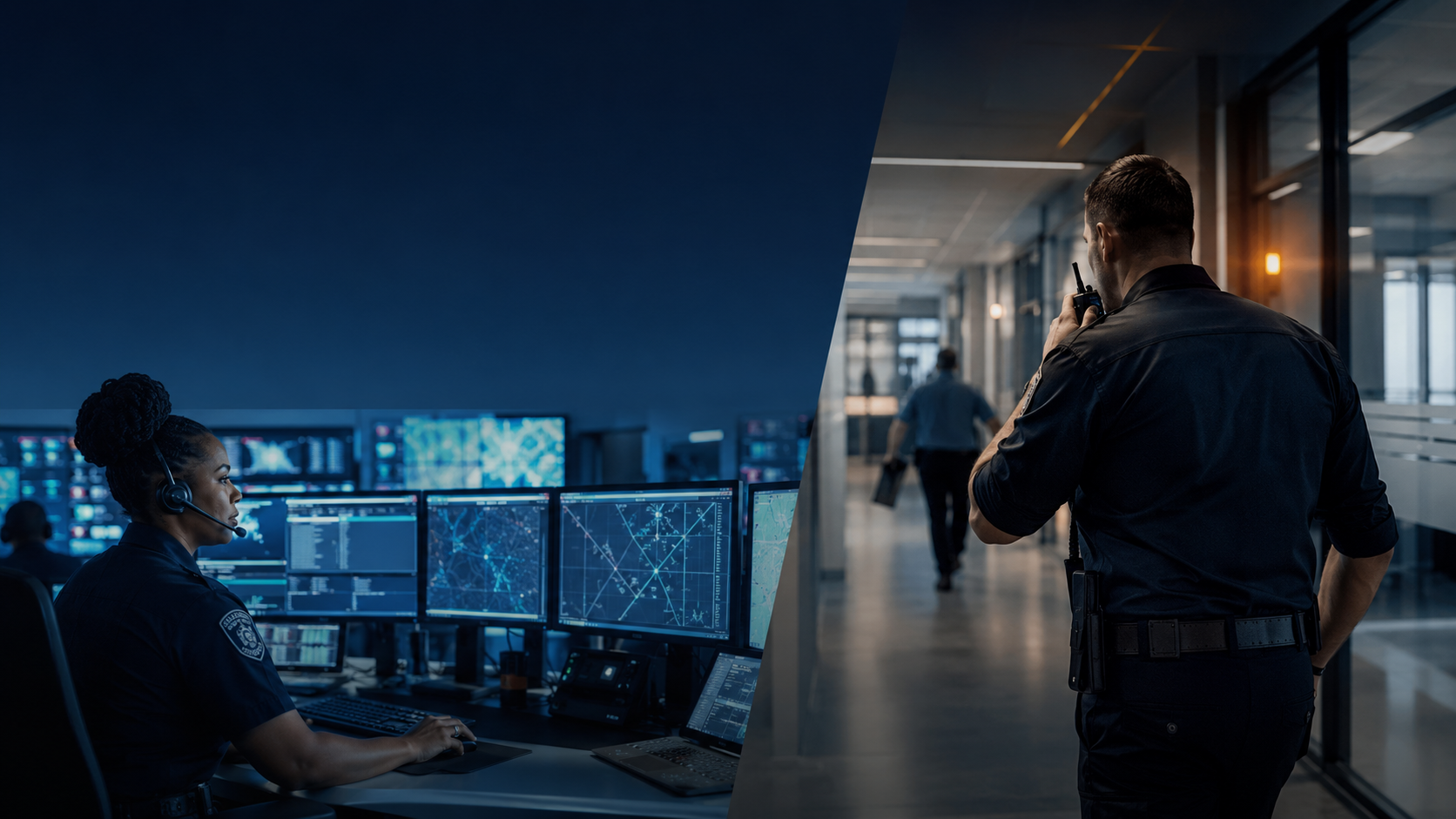
The moment a 911 call is placed from your building, two very different pictures start forming. On the other end, a dispatcher begins assembling a detailed, live account of the emergency: what happened, who is hurt, how bad it is, what is changing by the second. Inside your own building, thirty seconds from the room, your team gets a single fact: a call happened, here. That gap between what a stranger knows and what your own people know is the situational awareness problem, and it is almost entirely invisible until the day it matters.
Compliance conversations tend to stop at location: can responders find the caller. That is necessary, and it is only half of readiness. The other half is what your own team understands while everyone waits for those responders to arrive. This article is about that half.
What situational awareness actually means in the first minutes
Situational awareness is not a location. A location answers where. Awareness answers what, how serious, and how it is changing. It is the difference between “someone on the third floor called 911” and “there is a person unconscious in the east conference room, a colleague is doing CPR, and no one has an AED.” Both start from the same call. Only one lets your people do something useful before the ambulance is at the curb.
Those first few minutes are the ones your organization actually controls. Professional responders are still en route. The people who can act immediately, render first aid, clear a path, unlock a door, move a crowd, keep a threat contained, are already in the building. What limits them is rarely willingness. It is that they do not know what they are responding to.
The notification ceiling
Most organizations meet their obligation here with a Kari’s Law notification: when a 911 call is placed, an alert goes to a central point such as a security desk or front office, carrying a callback number and the caller’s location. That notification is genuinely important. It is also the ceiling of what most teams ever learn, and its ceiling is low.
A notification tells you a call occurred and where it came from. It does not tell you whether you are responding to a heart attack, a fall, a fire in a supply closet, or a violent incident. So your team does the only thing the information allows: they head toward a location and find out what is happening by arriving. In a real emergency, arriving uninformed costs the exact seconds that were supposed to be your advantage.
Here is the part that stings: the information already exists
The frustrating truth is that the awareness your team lacks is being spoken aloud, in real time, on the very call that triggered your notification. The dispatcher’s interview surfaces all of it: the nature of the emergency, the number of people involved, hazards in the room, whether the caller can still talk. That content is the richest, most current description of the emergency that exists anywhere, and it is flowing through a call your phone system is carrying.
And in most environments, none of it reaches your team. The call passes through, the words evaporate, and your people are left with the notification’s bare summary. The gap is not a shortage of information. It is that the information never gets captured and handed to the people who could use it.
What real-time transcription changes
This is the specific problem 9Line built Echo to solve. Because 9Line sits in the path of the 911 call, Echo transcribes the conversation as it happens and delivers the substance of it, the words, the keywords, the meaning, to your response team while the call is still live. The alert that used to say only “911 call, third floor” can now carry what the caller is actually telling the dispatcher.
The change in what your team can do is not incremental. Consider the same moment with and without it:
- Without Echo: Security sees that a call was placed on floor 3. They start walking, unsure whether to bring a first-aid kit, call for building-wide action, or approach with caution.
- With Echo: Security sees floor 3, and reads that the caller reported a coworker collapsed and not breathing. They grab the AED on the way and send someone to hold the elevator for paramedics, before they have even reached the room.
Same call, same thirty seconds, completely different response. That is what situational awareness buys, and it is why awareness, not just location, is the real measure of whether an organization is ready.
Awareness is a team sport
The value compounds once more than one person can see the same picture. An emergency is rarely handled by a single guard. It pulls in the front desk, floor wardens, a facilities lead who knows which door actually opens, a manager who can account for who is in the building. When each of them is working from the same live understanding of the call rather than their own guesses, the response stops being a series of disconnected reactions and becomes something coordinated.
It also does not end when responders arrive. The team that has been tracking the call can hand first responders a coherent account at the door: what was reported, what has changed, where to go. That handoff, informed rather than improvised, is often where minutes are won or lost.
From “we are compliant” to “we are ready”
It is worth being clear about how these fit together, because they are frequently confused. Getting your dispatchable location right is what makes responders able to find the caller. Situational awareness is what lets your own people act well in the interval before those responders arrive. The first is largely a legal mandate. The second is the operational advantage, and it is the part that turns a compliant phone system into a genuinely safer building.
An organization can be fully compliant and still respond blind. Closing that gap is not about more notifications. It is about giving your team the same understanding of the emergency that the dispatcher already has.
Where readiness actually lives
A 911 notification tells your team that something happened and where. The dispatcher, meanwhile, knows what is happening, how bad it is, and how it is changing, all drawn from a call your system is already carrying. Situational awareness is the work of getting that understanding to the people close enough to act on it. 9Line handles the location foundation across Cisco Call Manager, Microsoft Teams Direct Routing, and BroadWorks, with validated data and no software to install. Echo carries you past it, transcribing the 911 call in real time so your team knows what the dispatcher knows while it still matters. Location gets help to the door. Awareness decides what happens in the minutes before it arrives. Let’s make sure your team is not the last to know.