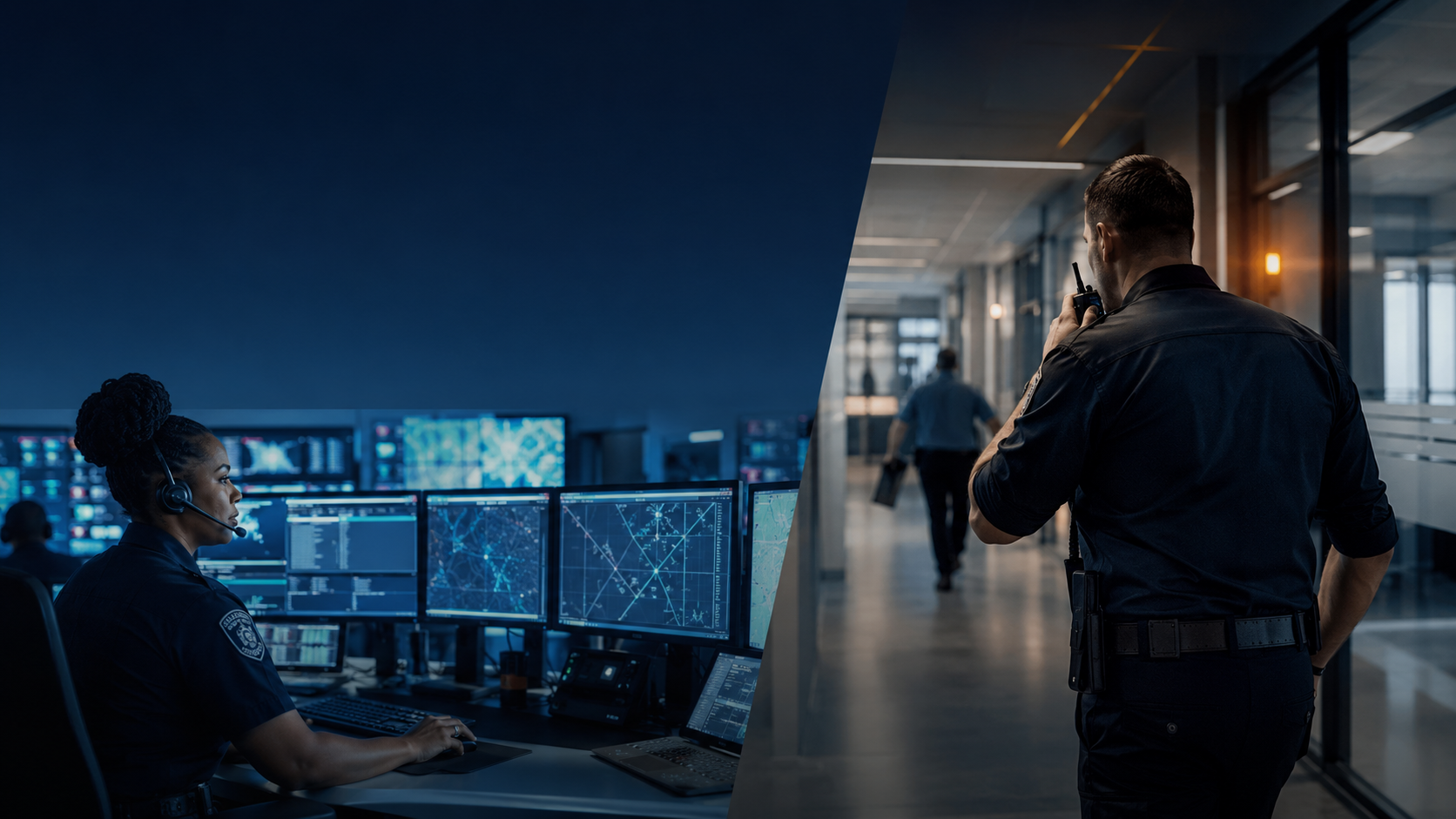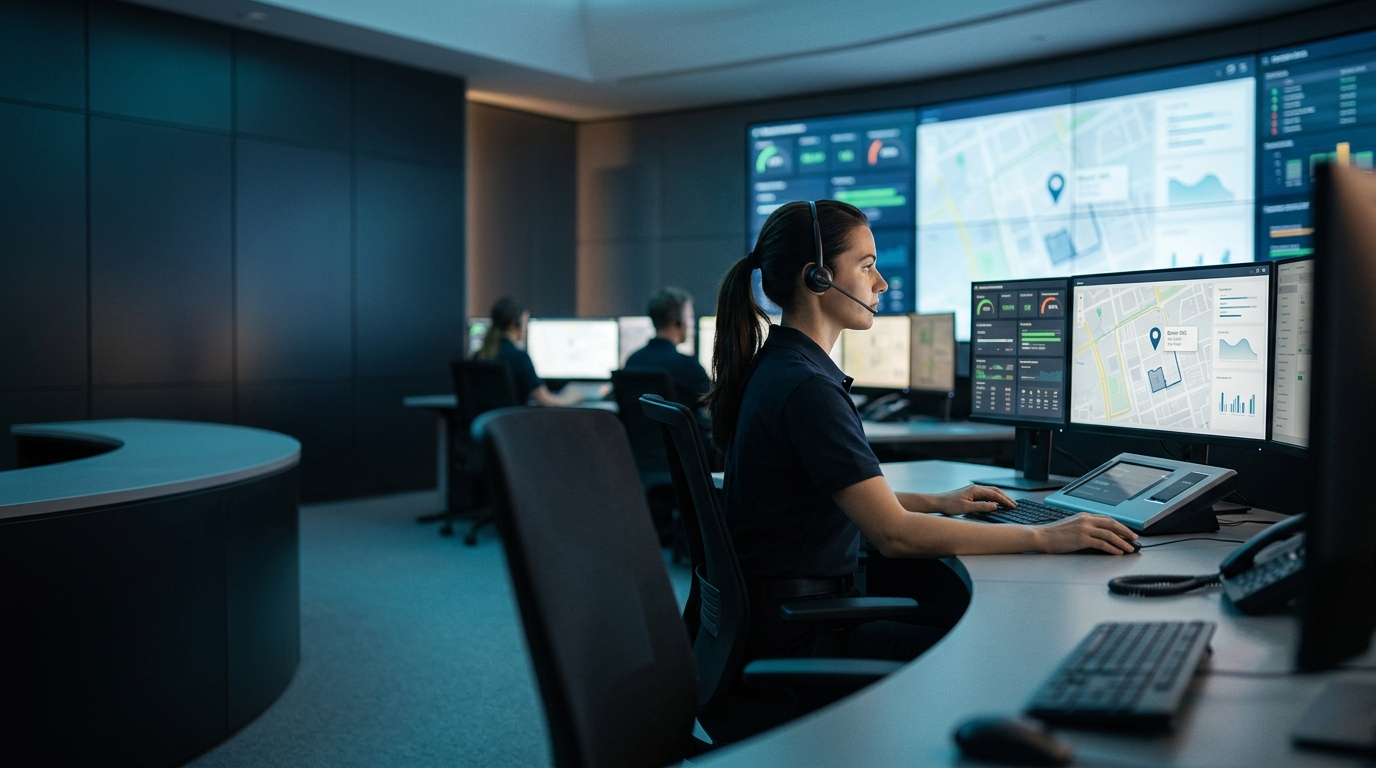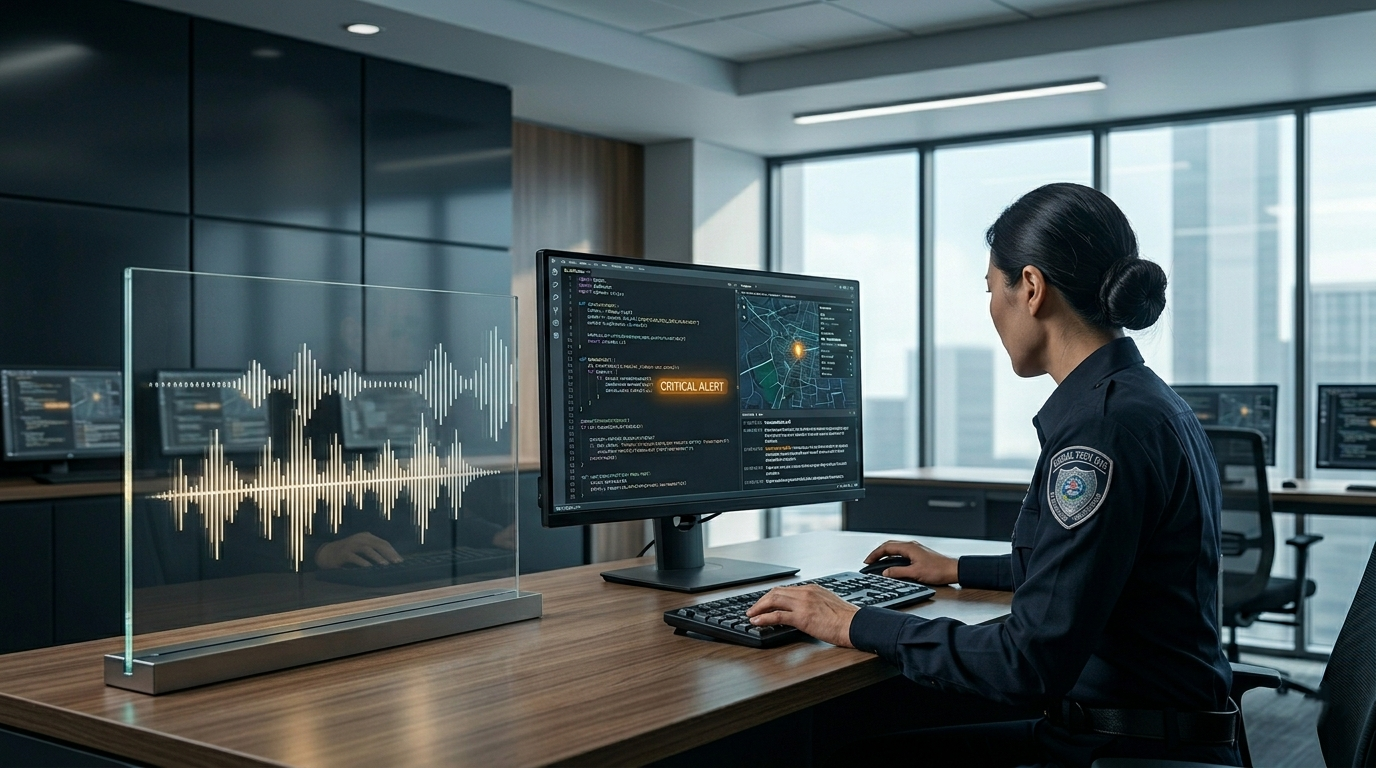
A 911 call goes out from a desk phone on the third floor. Within seconds, the on-site alert fires exactly the way Kari’s Law intended: 911 call placed — Building A, 3rd floor.
Your security team starts moving. And that’s the moment the system goes quiet on them. They know where to go. They have no idea what they’re about to walk into.
On-site notification was a genuine leap forward for enterprise emergency response. But it answers only the first question — that a call happened, and roughly where. The far more useful question, the one your responders are silently asking the whole way there, is what is actually happening. Echo answers that one.
The notification that tells you almost nothing
Kari’s Law made direct 911 dialing and immediate on-site notification mandatory for every multi-line phone system. When someone lifts a desk phone and dials 911, the right people are alerted automatically: a call was placed, and here’s the location it came from. That requirement exists for a hard-earned reason, and meeting it matters.
But look closely at what that alert contains, and what it leaves out. It tells your team a call originated on the third floor. It does not tell them whether they’re responding to a cardiac arrest, a kitchen fire, a severe allergic reaction, a fall, or a violent threat. Each of those demands a different response — different equipment, a different pace, a different number of people, a different posture at the door. Your responders get none of it. They get a location, and they start guessing.
Location solved “where.” It never solved “what.”
The compliance framework most organizations are built around was designed to answer two specific questions. Kari’s Law answers did a call happen, and were the right people told. RAY BAUM’s Act answers where is the caller, precisely enough to send help — the dispatchable location, down to the building, floor, and room.
Those are the right questions to have answered. They are also, quietly, the easy ones. Neither law was ever designed to convey the nature of the emergency, because that was never their purpose. So organizations end up fully compliant and still fundamentally in the dark about the one thing that shapes how they respond: what is actually wrong.
The information already exists. It’s just not reaching your people.
Here’s what makes the gap so frustrating. The information your team needs isn’t missing — it’s being spoken aloud, in real time, a few feet from where the emergency is happening.
When the caller talks to the 911 dispatcher, they describe everything: “he grabbed his chest and collapsed,” “there’s smoke coming from the break room,” “someone in the lobby has a weapon.” The dispatcher uses that running description to decide what to send and how fast. By the time first responders arrive, they’ve been briefed.
The organization where the emergency is physically unfolding — the people closest to the scene, often seconds away — hear none of it. The richest source of understanding in the entire event flows straight past them to a call center across town. That’s the gap.
Why most platforms can’t close it
Most E911 vendors provision a dispatchable location record and then step out of the way. They make sure the call routes correctly and the location is accurate, and that’s the end of their involvement. They never touch the conversation itself — which means they have nothing to tell your team beyond the bare fact that a call occurred.
9Line is built differently, and the difference is structural. 9Line sits in the call path. The call’s audio actually flows through the platform on its way to the PSAP. That position — inside the call rather than alongside it — is the one vantage point from which the contents of a 911 call can be surfaced to anyone at all. A platform that isn’t in the media path can’t analyze what it never receives. It’s the reason Echo is possible on 9Line and not on systems that only handle provisioning.
What Echo does
Echo turns the live 911 call into real-time situational awareness for the people on your side of the emergency. It works as a continuous loop while the call is still connected:
- Detects the call. The moment a 911 call is placed through your phone system, Echo identifies it and begins monitoring.
- Transcribes in real time. The audio is converted to text as the call happens — not after it ends — so your team can read the emergency as it’s being described.
- Reads the context. Echo matches what’s being said against keyword lists you configure — “weapon,” “overdose,” a building name, a specific room number — and runs semantic analysis to understand the meaning of the call, so “he grabbed his chest” registers as a likely cardiac event even if no one ever says “heart attack.”
- Alerts the right people. When something meaningful surfaces, Echo routes an intelligent alert through Nexus to the personnel you’ve designated — conveying not just that a call is happening, but what it appears to be about.
- Keeps updating. As the call continues and the situation changes, new information flows to your team. If a routine-looking call escalates, they know immediately.
What your team actually sees
The difference is easiest to feel in the alert itself. Today, a typical on-site notification looks like this:
911 call placed — Building A, 3rd floor — 2:34 PM
With Echo, the same call reaches your team like this:
🔴 MEDICAL — Building A, 3rd floor — 2:34 PM
Detected: chest pain, not breathing, collapsed
Same trigger, same location. One sends a person to guess; the other sends a person who already knows to bring the AED and move fast.
What that changes on the ground
When responders know what they’re walking into, the first few minutes — the minutes before professional responders arrive, which matter enormously in a cardiac event or a fire — stop being a guess.
A medical event: a responder who sees “chest pain, collapsed” grabs the AED on the way and sends someone to meet EMS at the entrance, instead of arriving empty-handed and having to turn back.
A violent threat: a team that sees “weapon, threatening” doesn’t approach alone or casually. They coordinate, consider locking down nearby areas, and can brief law enforcement when they arrive.
A false alarm: just as valuable, a team that can see the call is a misdial or a minor issue doesn’t pull every officer off their post for nothing.
Beyond the first alert
Context keeps paying off after the initial dispatch. Because Echo monitors the call as it unfolds, your team gets updates if the situation changes — a medical call that turns into something else, a contained problem that starts to spread. When police, fire, or EMS arrive, your people can hand them something better than “someone called 911 from the third floor” — they can say what’s actually happening inside. And the transcript and keyword log become part of your incident record, useful for post-incident review, compliance documentation, and training.
Where Echo stops
It’s worth being precise about Echo’s scope, because the honest boundary is part of what makes it trustworthy. Echo works on spoken 911 calls that travel through your phone system. It isn’t a substitute for accessible reporting channels — text-to-911 and Real-Time Text for callers who can’t speak or hear — and it doesn’t capture calls placed from personal mobile devices that bypass your system entirely. A complete emergency plan still needs those channels. What Echo guarantees is that for the calls that do come through your phones, nobody on your side is left guessing about what they are.
The bottom line
On-site notification tells your team that an emergency exists and where to run. The harder, more valuable step is telling them what it is, in time to act on it. For years, that gap persisted because closing it was impractical — the understanding lived inside a phone call no one on-site could hear. That’s no longer true. Real-time transcription and semantic analysis exist today, and because 9Line sits in the call path, they’re something your compliance platform can actually deliver rather than merely promise.
Your team is already running toward the emergency. Give them what they need before they get there.
Talk to 9Line about Echo — and give your responders the same understanding of an emergency that the dispatcher already has.
9Line Software is the cloud-based E911 compliance platform built for Cisco Call Manager, Microsoft Teams, and BroadWorks. Echo, 9Line’s AI-powered transcription and alerting service, is made possible because 9Line sits in the call path — where safety actually gets handled.