The federal law that governs your 911 system was written because of what happened in a hotel room. That’s not a coincidence worth ignoring.
In December 2013, Kari Hunt was attacked by her estranged husband in a motel in Marshall, Texas. Her nine-year-old daughter picked up the room phone and dialed 911 four times. Not one call connected — because the motel’s phone system required guests to dial “9” first to reach an outside line, and a frightened child had no way to know that.
That tragedy became Kari’s Law, signed in 2018 and in effect since February 16, 2020. It requires multi-line telephone systems to allow direct 911 dialing — no prefix — and to send a notification to an on-site point like a front desk or security office whenever someone calls 911. In other words, the entire framework most enterprises now work to comply with was born in hospitality. Hotels aren’t an afterthought in this story. They’re the origin.
And yet hospitality may be the single hardest environment in which to actually respond well to a 911 call. Compliance gets you to the legal floor. The realities of running a property start well above it.
The night-shift math doesn’t work in your favor
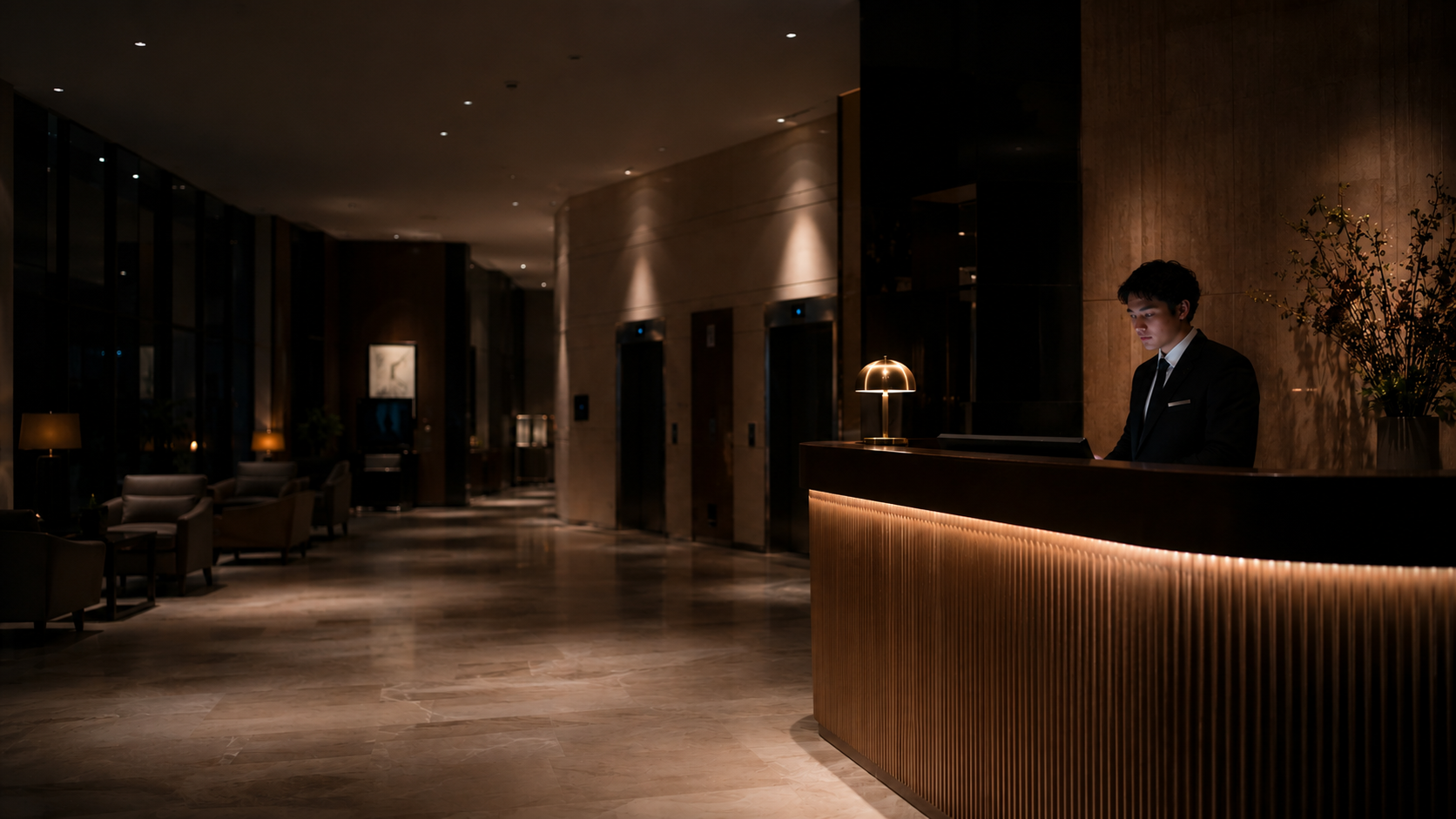
Most of the workplaces that worry about 911 response — corporate campuses, hospitals, manufacturing floors — have people around. Hotels, at 3 a.m., often have one. A single front-desk clerk can be the entire on-site emergency response team for hundreds of occupied rooms across multiple floors, while also checking in a late arrival and fielding the phone.
When a 911 call comes from room 814, that clerk is who Kari’s Law notifies. They’re the person closest to the emergency, the one who can be at the door before EMS reaches the parking lot. But “closest” only helps if they know what they’re walking into — and a basic notification tells them almost nothing.
Your guests can’t tell anyone where they are
A guest in distress is the least-oriented person in your building. They likely don’t know the property’s street address. Under pressure, plenty of people can’t recall their own room number. They may be a tourist who speaks little English, an international business traveler, or a wedding guest who arrived an hour ago. Every assumption your response plan makes about a caller knowing where they are quietly breaks in a hotel.
That’s exactly why dispatchable location — the requirement under RAY BAUM’s Act to deliver a specific, usable location with the call — matters more in hospitality than almost anywhere else. The caller can’t supply it. Your system has to.
The building itself works against you
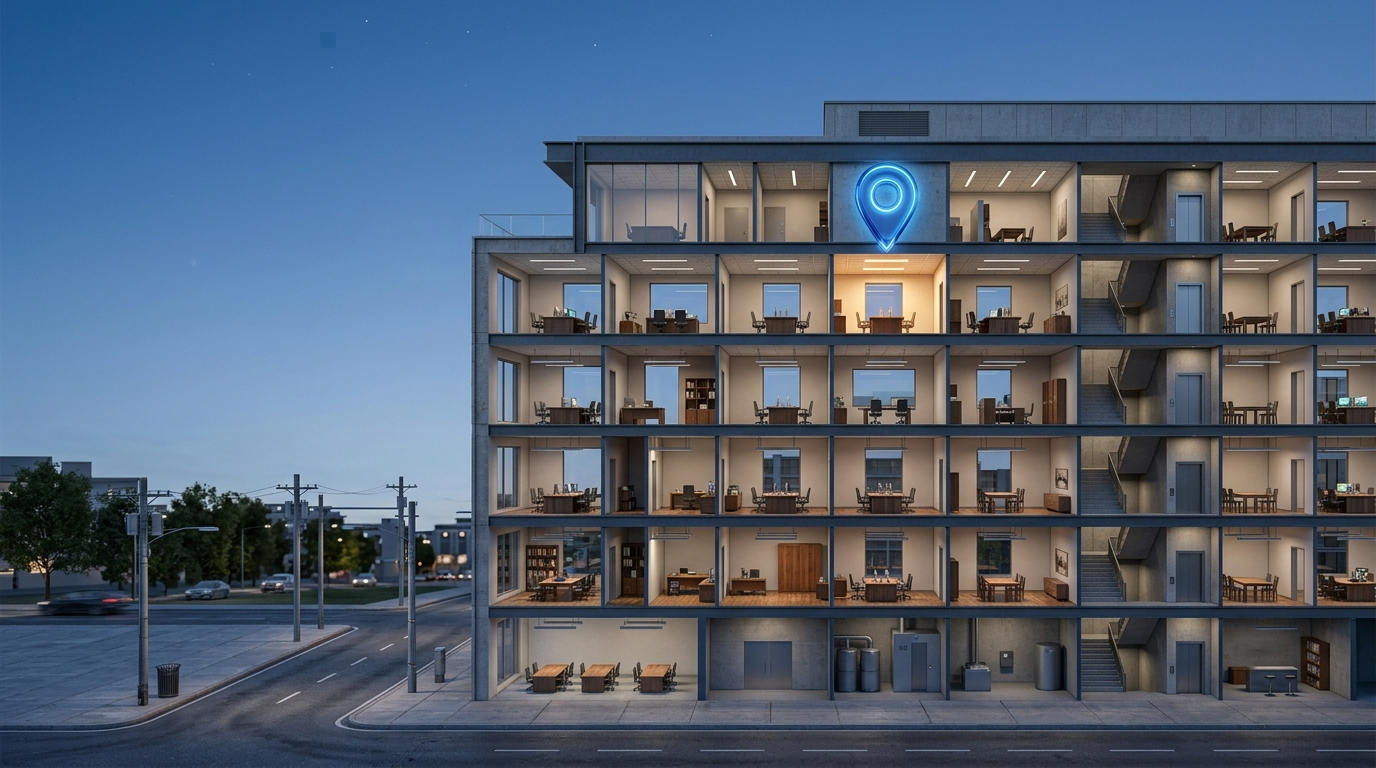
Hotels sprawl in ways office buildings don’t. Towers and wings, conference centers, ballrooms, pool decks, parking structures, restaurants operated under a different name, a spa on the third floor. A 911 call could originate from any of them, and “the Marriott on Main Street” isn’t a location a responder can act on when the property covers six acres.
Layer on the operational structure — franchised properties, third-party management companies, brand standards that may or may not address emergency communications — and accountability for 911 readiness can fall through the cracks between the owner, the operator, and the brand. The law doesn’t care whose name is on the management contract. It applies to the system.
Why notification alone leaves your front desk stranded
Here’s the gap. Kari’s Law requires that your front desk be notified. It doesn’t require — and most systems don’t provide — any sense of what the emergency actually is. Your clerk gets an alert and a room number. Then they have to decide, alone, whether to grab a first-aid kit, call for a manager, unlock a door, or keep their distance and wait for police.
A medical episode, a fire, a guest dispute turning violent, an overdose — these demand completely different responses, and the difference between them is in the words being spoken on the call. Your on-site team is the only group responding to that emergency without access to those words. The dispatcher has them. The clerk fifty feet away does not.
Here is the part worth sitting with: that gap is not a law-of-physics problem, it is a design problem. The words exist. They are being spoken into the call as it happens. The only open question is whether anything puts them in front of the person already running toward the room — and that is precisely the gap 9Line built Echo to close.
What “ready” actually looks like for a property
Real readiness in hospitality stacks up in layers:
- Direct 911 dialing from every phone — guest rooms, house phones, back of house. No prefix, no exceptions. This is the literal lesson of Kari’s Law.
- Notification that reaches whoever is actually on shift — not a back-office workstation nobody is watching at 3 a.m., but the device in the hand of the person who can respond.
- Dispatchable location precise to the room or zone — because the guest can’t provide it and your buildings are too large for a street address to mean anything.
- Real-time understanding of the call — the piece almost no property has. Knowing not just that a call happened and where, but what’s being said, as it’s said.
That last layer is where 9Line’s Echo comes in. Because 9Line sits in the call path, Echo transcribes the 911 call in real time and surfaces it to your on-site team — turning a blinking room number into actual situational awareness. The clerk heading for the elevator knows whether they’re responding to a heart attack or a fire before the doors open.
And Echo does more than stream a transcript onto a screen. It matches what’s being said against keyword lists you define — terms like “not breathing,” “gun,” “smoke,” or “overdose” — and applies semantic analysis to read the context of the call, then pushes an intelligent alert to the right people through Nexus, 9Line’s notification platform, on whatever device they happen to be carrying. The front-desk clerk, a roving security officer, and the on-call manager can all learn the same thing in the same moment: not just that room 814 called 911, but that someone inside is choking. The clerk grabs the AED instead of the master key. The manager is already moving before the first alert is acknowledged.
This is not a feature a provider can bolt on after the fact. Real-time understanding of the call only works if you have the call — the live audio of the conversation itself — and most 911 solutions never touch it. They hand off the connection and learn nothing about what was said. Echo exists because 9Line sits in the media path of the call, the control that platforms riding on top of someone else’s network simply don’t have. For a hotel, that is the difference between a notification that tells your overnight staff a call happened and one that tells them what to do about it.
The bottom line for hospitality
Kari’s Law exists because a hotel phone failed a child who did everything right. The minimum the law requires — direct dialing and a notification — is the floor that tragedy set, not the ceiling your guests deserve. In an industry defined by lean overnight staffing, disoriented guests, and buildings the size of small neighborhoods, the gap between “a call happened somewhere” and “here’s what’s happening and where” is the gap that decides outcomes.
Direct dialing and dispatchable location get a responder to the right door. Echo is what tells them what’s waiting on the other side of it.
Request an Echo demo and see what real-time understanding looks like for a property where the front desk is the first responder.
9Line Software is the cloud-based E911 compliance platform built for Cisco Call Manager, Microsoft Teams, and BroadWorks. Echo, 9Line’s AI-powered transcription and alerting service, is made possible because 9Line sits in the call path — where safety actually gets handled.