If you or someone you know is in crisis, call or text 988 to reach the 988 Suicide & Crisis Lifeline. If someone is in immediate danger, call 911.
Most organizations have spent years making sure 911 works from every phone in the building. Far fewer have looked at what happens when an employee dials 988. The two numbers are both three digits, and both connect people to help, but they work very differently. That difference matters for how your phone system is configured and for what your team should expect.
What 988 is
988 is the nationwide number for the 988 Suicide & Crisis Lifeline. The FCC adopted rules establishing it in July 2020, and phone and text providers were required to connect 988 calls and texts to the Lifeline by July 16, 2022. The Lifeline is a network of more than 200 crisis centers. Callers can press 1 for the Veterans Crisis Line, press 2 for Spanish, and people who use American Sign Language can reach 988 by videophone (FCC).
988 vs. 911
According to SAMHSA, the federal agency that oversees the Lifeline, 988 connects people with trained counselors who provide emotional support and crisis de-escalation without relying on law enforcement or emergency medical response unless it's necessary. 911 is the primary contact for medical emergencies, fires, crimes in progress, and other situations that need immediate physical intervention (SAMHSA).
The two connect when they need to. When there is an imminent risk to someone's life that can't be reduced during the call, the 988 counselor contacts 911. SAMHSA lists situations where calling 911 directly is appropriate, including a suicide attempt in progress, a suspected overdose, and physical symptoms such as chest pain or shortness of breath that could be a medical emergency (SAMHSA).
How 988 calls are routed
This is where 988 and 911 differ most for an enterprise.
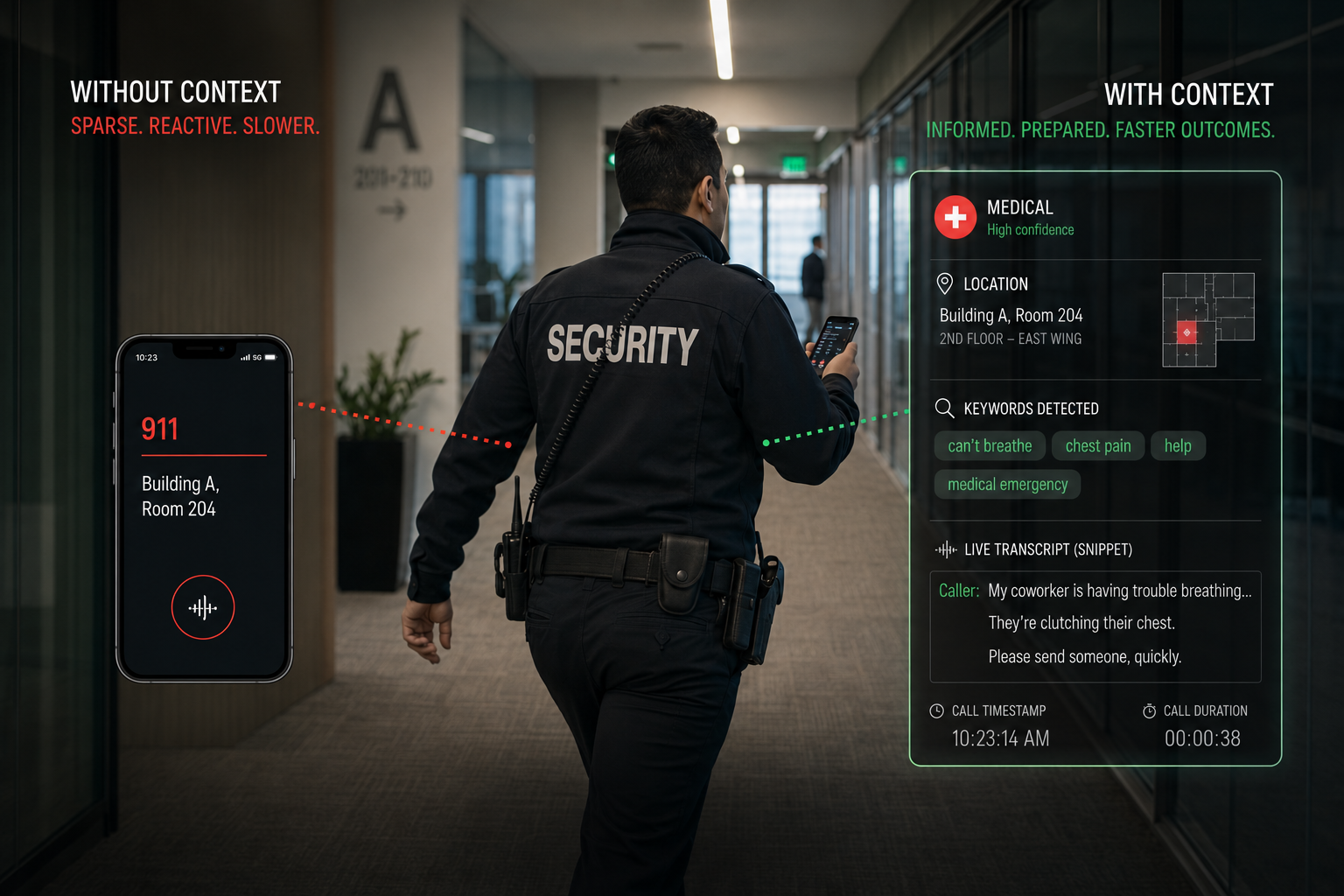
- 911 carries location. Under RAY BAUM's Act, a 911 call from your phone system must carry a dispatchable location so responders can find the caller (FCC).
- 988 does not. SAMHSA describes 988 georouting as sending a call to a crisis center near the caller's approximate location without passing the caller's precise location along, and says the Lifeline has no plans to implement geolocation. Wireless carriers are required by FCC rules to georoute 988 calls and texts. Calls that aren't georouted are sent to a crisis center based on the first six digits of the caller's phone number, regardless of where the caller actually is. Calls not answered locally go to the Lifeline's national backup network (SAMHSA).
What that means for your phone system
Kari's Law and RAY BAUM's Act don't apply to 988. Those laws govern 911 calls. A 988 call from a desk phone doesn't trigger your on-site notification and doesn't carry a dispatchable location. That's appropriate: 988 is a confidential service, and the people calling it are usually not asking for anyone to come to them.
Routing may follow the number, not the person. The FCC's georouting rules apply to wireless carriers. A 988 call from a desk phone or softphone on your business phone system may be routed on the phone number it presents. If your branch offices or remote employees present a headquarters number, an employee in one state could reach a crisis center in another. They'll still get help, but a local center knows local resources. Ask your carrier how it routes 988 calls from your trunks.
Dial plans can trip it up. Many phone systems were built around dialing 9 for an outside line. Kari's Law requires that 911 work without a prefix, but there is no equivalent rule for 988. On any system that uses an access code, test that dialing 988 actually reaches the Lifeline.
Keep 988 out of your 911 tools. Notification rules, call recording, and transcription built for 911 should not be applied to 988. Employees need to trust that a call for support stays private.
A checklist for IT, HR, and security leaders
- Test 988 from every phone platform. Desk phones, softphones, and any system that uses an outside-line prefix.
- Ask your carrier how 988 calls from your lines are routed, especially for sites and remote workers that present a different number than their location.
- Confirm 988 is excluded from 911 notifications, recordings, and transcription.
- Teach the difference. Include when to call 988 and when to call 911 in your employee assistance and emergency materials, using SAMHSA's guidance.
- Make sure 911 still works the way it should. When someone is in immediate danger, the call that matters is to 911, with a dispatchable location and a notification to your on-site team.
Make the 911 side solid
988 is designed to keep a caller's location private. 911 is designed to deliver it. Your organization is responsible for the second one: when an employee is in immediate danger, responders need to find them fast, and your on-site team needs to know.
9Line Dispatch delivers Kari's Law and RAY BAUM's Act compliance for Cisco Unified CM, Microsoft Teams Direct Routing, and Cisco BroadWorks, sending a dispatchable location with every 911 call and alerting your on-site team the moment someone dials. Talk to us about where your environment stands.
Sources
- Federal Communications Commission, 988 Suicide and Crisis Lifeline.
- Substance Abuse and Mental Health Services Administration, 988 Frequently Asked Questions.
- Federal Communications Commission, 911 Requirements for Multi-Line Telephone Systems (Kari's Law and RAY BAUM's Act).