When someone dials 911 inside a hospital, every detail matters. Is the call coming from the third-floor ICU or the ground-floor lobby? Wing A or Wing B? The main tower or the outpatient building across the parking garage? Federal law now expects your phone system to answer those questions automatically, on every call.
This guide covers what the law requires of healthcare phone systems, why hospitals and clinics are harder to get right than most workplaces, and the practical steps to full compliance.
What federal law requires
Two federal laws set the rules for 911 calls from a multi-line telephone system (MLTS), the category that covers Cisco Unified CM, Webex Calling, Microsoft Teams Phone, and hosted platforms like BroadWorks (FCC).
- Kari's Law requires that any MLTS manufactured, imported, sold, leased, or installed after February 16, 2020 let users dial 911 directly, with no prefix such as 9 for an outside line, and notify a central location, such as a security desk, when someone dials 911, where technically feasible.
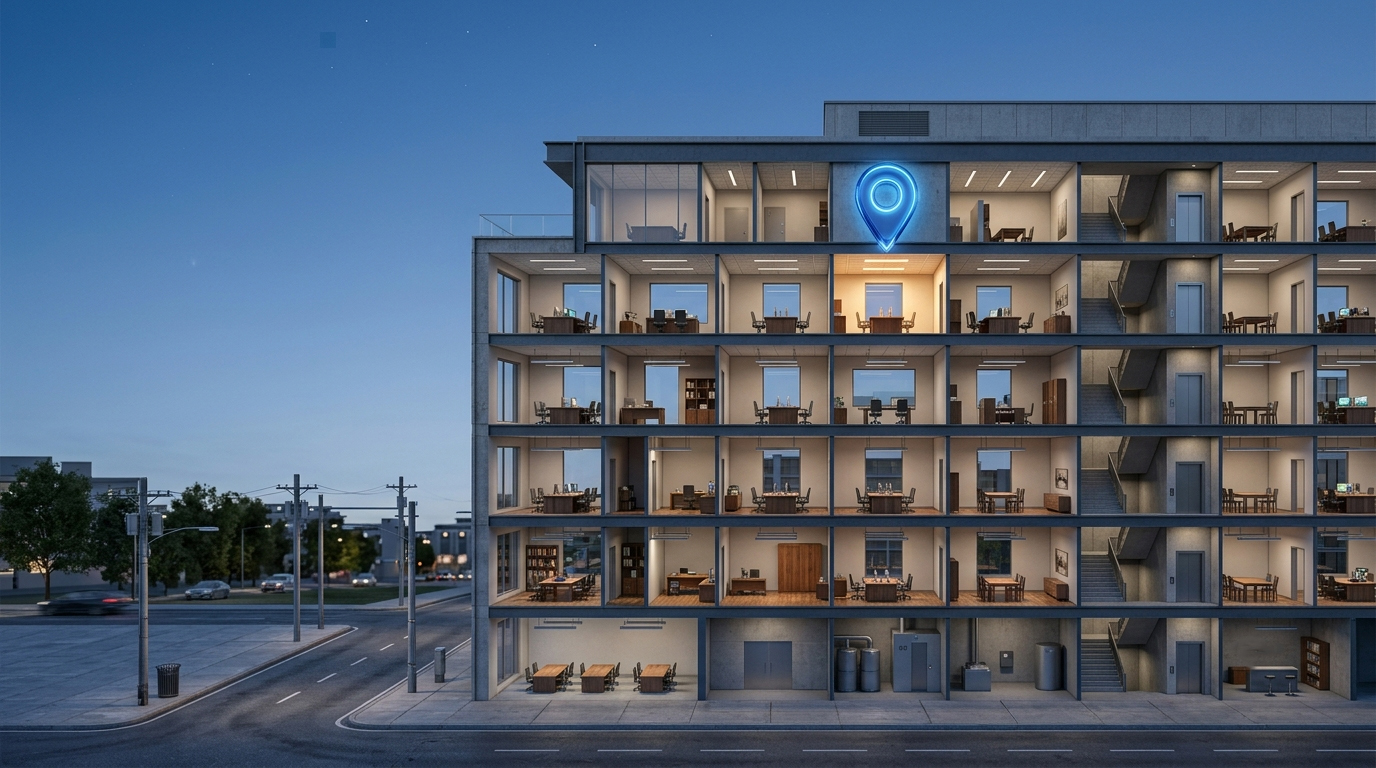
- RAY BAUM's Act requires that a 911 call from an MLTS carry a dispatchable location: the street address plus the details responders need to find the caller, such as building, floor, and room.
For a plain-language walkthrough of both laws, see Kari's Law and RAY BAUM's Act: The Plain-English Guide, and for what an address has to include, what counts as a dispatchable location.
Why healthcare is harder than most
- Scale and density. A hospital campus can span dozens of buildings and thousands of phones, many of them shared at nursing stations and on carts.
- Constant movement. Physicians, nurses, and support staff move across floors, wings, and buildings all shift long, often carrying wireless devices.
- Remote and hybrid staff. Administrators, coders, and telehealth providers work from home on Teams or Webex, where the 911 location changes with them. See our guide to 911 compliance for remote workers.
- Mid-migration platforms. Many health systems run Cisco and Microsoft Teams side by side while they move from one to the other, and 911 has to work on both throughout.
- An existing emergency culture. Hospitals already run internal codes and rapid response teams. A 911 call from a nonclinical area still needs to reach both outside responders and your own security team fast.
Steps to full compliance
- Assess what you have. Confirm every platform allows direct 911 dialing and sends a location, and find any devices still sending only a main street address.
- Build location data to the room. Map buildings, floors, wings, and rooms or zones, and tie every phone and softphone to one.
- Route notifications to a staffed desk. Kari's Law notifications should reach security or the operator around the clock, with the caller's location included.
- Cover remote staff. Make sure clinicians and administrators working off campus can register and update their location.
- Test regularly. Use your provider's 933 test service, where offered, to check the address and callback number on file, and schedule live test calls with your local 911 center to confirm calls reach the right center with the right location. Our 933 testing guide explains how.
- Train staff. Make sure staff know they can dial 911 directly and know when to call 911 versus an internal code.
The cost of getting it wrong goes beyond fines. Delayed response is a patient safety and liability problem. Our breakdown of the real cost of 911 non-compliance covers the exposure in more detail.
Frequently asked questions
Do Kari's Law and RAY BAUM's Act apply to hospitals?
Yes. Kari's Law and RAY BAUM's Act apply to any multi-line telephone system (MLTS), including the Cisco Unified CM, Webex Calling, Microsoft Teams Phone, and BroadWorks systems hospitals and clinics use. Systems manufactured, imported, sold, leased, or installed after February 16, 2020 must allow direct 911 dialing, notify a central location such as a security desk, and send a dispatchable location.
What counts as a dispatchable location in a hospital?
In a hospital, a dispatchable location is the street address plus the details responders need to find the caller, such as building, floor, wing, and room or zone. A 911 call from the third-floor ICU should not reach the 911 center with only the main campus address.
Why is 911 compliance harder in healthcare than in other workplaces?
911 compliance is harder in healthcare because campuses can span dozens of buildings and thousands of phones, many shared at nursing stations and on carts. Staff move across floors and buildings all shift with wireless devices, administrators and telehealth providers work remotely, and many health systems run Cisco and Microsoft Teams side by side during migrations.
Who should receive Kari's Law notifications in a hospital?
Kari's Law notifications in a hospital should reach a desk that is staffed around the clock, such as security or the operator, and include the caller's location, so a 911 call from a nonclinical area reaches both outside responders and the hospital's own security team fast.
How should a hospital test its 911 setup?
A hospital should use its provider's 933 test service, where offered, to check the address and callback number on file, and schedule live test calls with the local 911 center to confirm calls reach the right center with the right location.
How 9Line helps
9Line Dispatch delivers Kari's Law and RAY BAUM's Act compliance for Cisco Unified CM, Microsoft Teams, and Cisco BroadWorks. It tracks on-premises devices by network location and maps each one to a building, floor, and room or zone. For remote users, it uses Microsoft Teams' Location Information Service or Webex HELD to pick up their current location. It assigns callback numbers at call time, so you don't need a DID for every device, and it alerts your designated contacts by SMS, email, webhook, or desktop notification the moment someone dials 911. Every site is managed from one cloud portal. Talk to us about where your environment stands.
Source
Federal Communications Commission, 911 Requirements for Multi-Line Telephone Systems (Kari's Law and RAY BAUM's Act).
See Echo on a live call
Echo works with Cisco Unified CM, Cisco Emergency Responder, Microsoft Teams Direct Routing and Cisco BroadWorks, with no software to install.
See how Pinpoint works on your property
9Line Pinpoint draws geofences around your buildings, detects cellular 911 calls made inside them and tells your on-site team which building and approximate floor the call came from.
Make your phone system 911 compliant
9Line Dispatch sends a dispatchable location with every 911 call and alerts on-site staff the moment 911 is dialed, for Microsoft Teams, Cisco UCM, Cisco BroadWorks and Cisco Emergency Responder.
Talk to a 911 compliance specialist
Tell us about your property and phone system, and we will show you where 9Line Pinpoint and 9Line Dispatch fit.