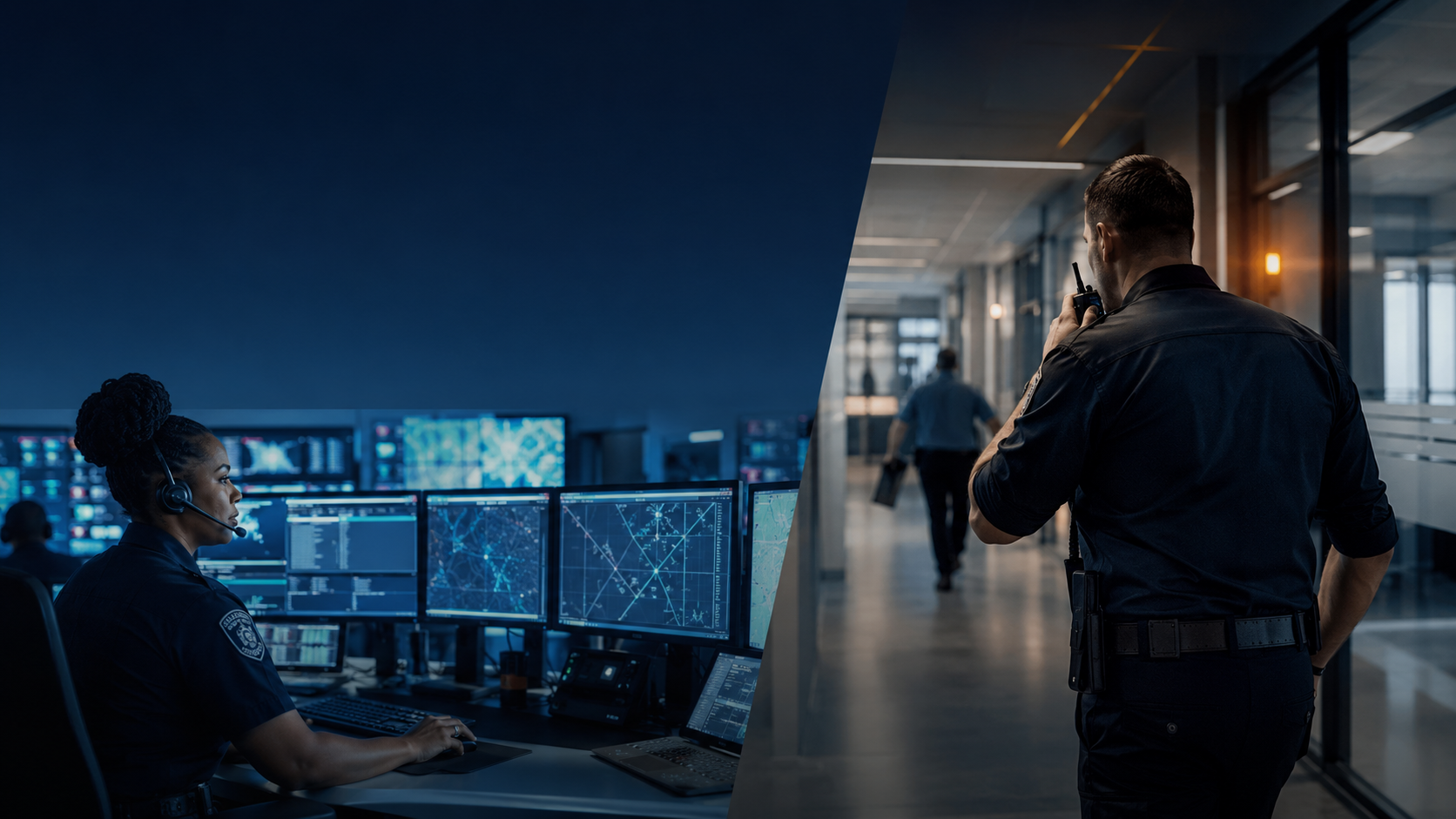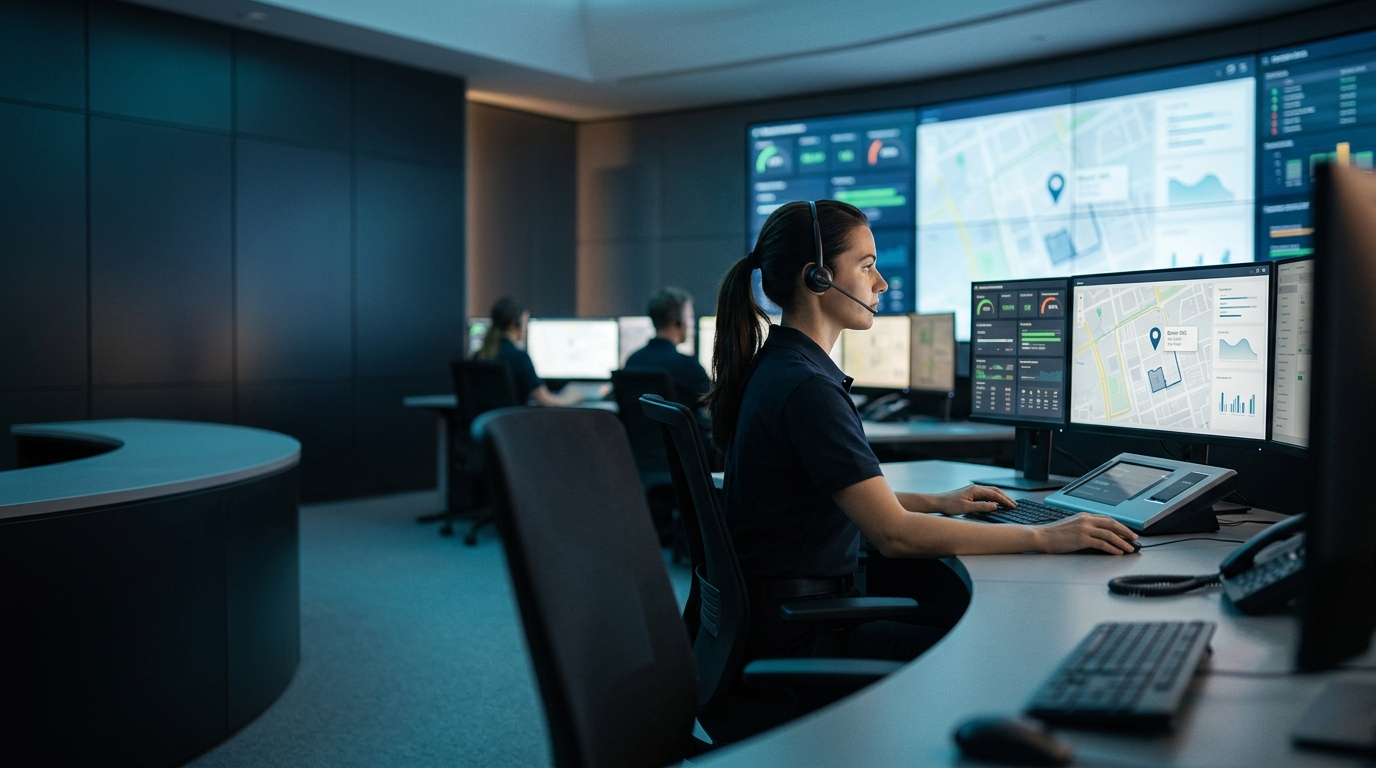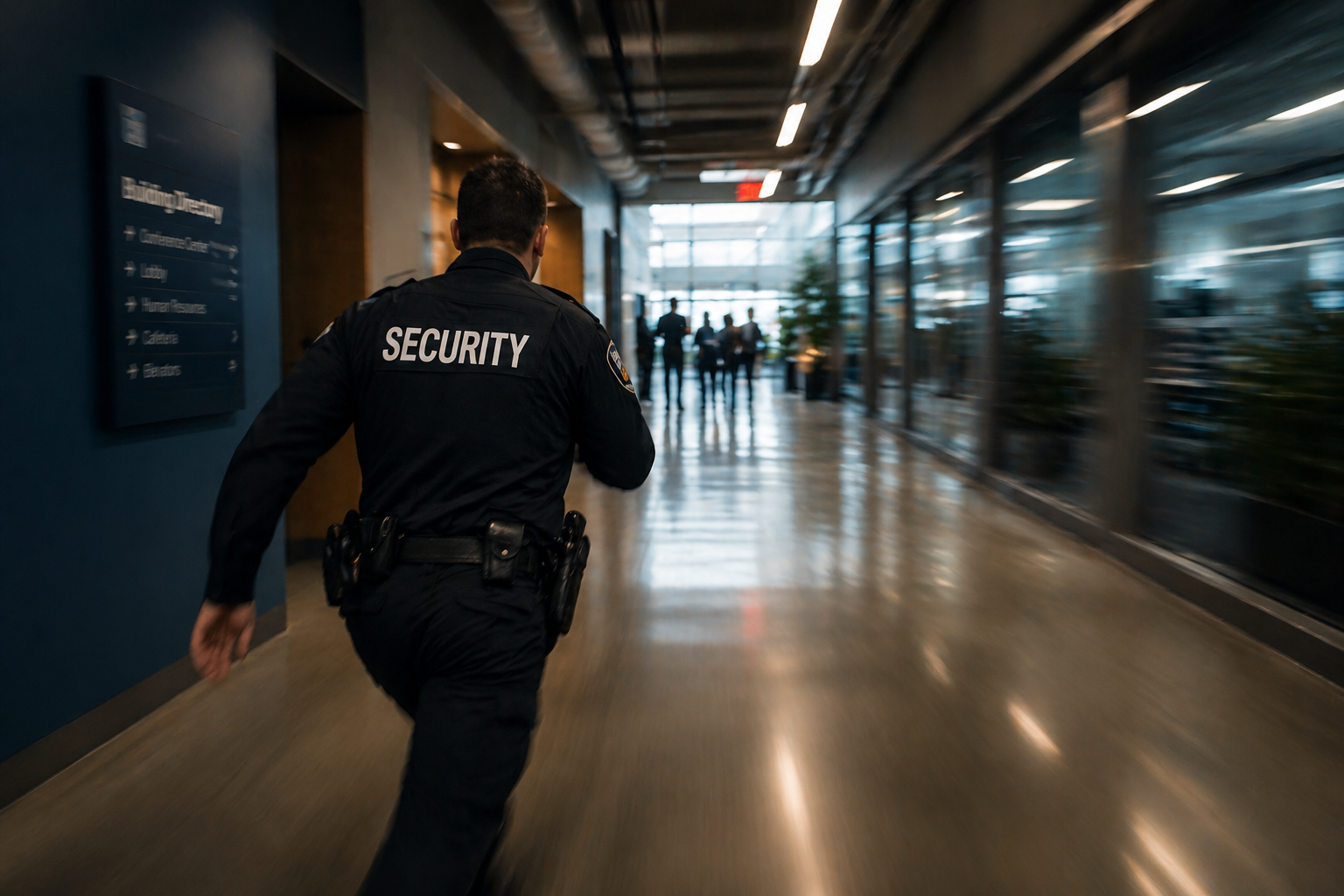
Your radio crackles. "911 call. Building C, third floor, Room 312."
You start moving. That's what you're trained to do. But as you walk — then jog — across the campus, your brain is running scenarios.
Is it medical? Should you grab the AED from the wall mount on your way?
Is it a fire? Should you be initiating evacuation protocols instead of heading toward the room?
Is it something violent? Should you be approaching differently — or not approaching at all until police arrive?
You don't know. The alert told you where. It didn't tell you what.
This is the gap that Echo was built to close.
The Information Gap
This is the daily reality for corporate security officers, facilities responders, and safety teams at organizations everywhere. They're the first internal response to any 911 call. They're expected to assist, coordinate, and sometimes intervene. And they're doing it with almost no information about what they're walking into.
The typical 911 notification includes:
- Location (building, floor, room)
- Time of call
- Maybe a phone extension or caller name
That's it. Everything else is unknown.
The person who called 911 is describing the emergency in detail to a dispatcher. They're saying words like "chest pain" or "not breathing" or "he has a knife" or "I smell smoke." That information is flowing — just not to you.
Echo changes that. By monitoring active 911 calls and delivering real-time keyword alerts, Echo gives responders the context they need before they arrive on scene.
The Mental Calculus
Without tools like Echo, experienced responders develop a kind of mental triage for unknown alerts. They think through probabilities based on context:
Time of day matters. A 911 call at 2 PM in an office building is probably medical — someone felt dizzy, had chest pain, fell. A call at 11 PM in an empty facility could be anything.
Location matters. A call from the cafeteria suggests different scenarios than one from the loading dock or the executive floor or the parking garage.
Caller matters. If the notification shows who dialed, you might know something about them. An employee with known health conditions. A department that handles hazardous materials. A floor with recent security concerns.
But this is all guesswork. Educated guessing, maybe, but guessing nonetheless.
And the stakes of guessing wrong are real.
When the Guess Is Wrong
You bring the wrong equipment. You grabbed the AED and first aid kit. You arrive to find a small fire in a trash can. Now you need to run back for an extinguisher while the situation escalates.
You bring the wrong posture. You approached at a jog, focused on providing medical aid. You round the corner into an active confrontation. You're not prepared — mentally or tactically — for what you're seeing.
You bring the wrong people. You responded solo because medical calls usually just need one person to meet EMS at the door. But there are three people injured. You're overwhelmed and backup is minutes away.
You trigger the wrong response. Unsure what you're facing, you initiate a building-wide evacuation. It turns out to be a single person with a minor injury. You've disrupted hundreds of people, cost the organization hours of productivity, and cried wolf in a way that makes the next alert less credible.
None of these are hypothetical. They happen constantly, in organizations of every size, in every industry. They just don't make headlines because usually the consequences are manageable.
Usually.
What Responders Actually Want
Talk to corporate security professionals about their 911 response process and the same request comes up over and over: "Just tell me what kind of emergency it is."
Not a complete transcript. Not a legal record. Just the basic category.
Medical. Someone is hurt or sick. Bring medical equipment. Prepare to assist with first aid. Clear a path for EMS.
Fire. Something is burning. Consider evacuation. Locate extinguishers. Account for personnel in the affected area.
Security. There's a threat — verbal, physical, or armed. Adjust approach accordingly. Coordinate with law enforcement. Consider lockdown.
Accident. Something went wrong — a fall, a spill, an equipment failure. Assess the scene for ongoing hazards. Document for incident reporting.
This is exactly what Echo delivers. By detecting keywords spoken during 911 calls — and using AI-powered semantic analysis to catch contextual matches — Echo categorizes emergencies in real time and alerts responders with the context they need.
The Dispatcher Knows. Now You Can Too.
Here's the frustrating part. The information gap isn't because the information doesn't exist. It's because of how the 911 system was designed.
When someone calls 911, they describe the emergency. The dispatcher asks clarifying questions. A detailed picture emerges — what's happening, how many people are involved, what hazards are present, whether the situation is stable or escalating.
Dispatchers use this information to decide what resources to send. Police, fire, EMS — or some combination. Lights and sirens, or routine response. One unit or multiple.
By the time first responders arrive on scene, they've been briefed. They know what they're walking into.
But the organization where the emergency is happening? The security officer jogging across the parking lot? Traditionally, they know only that a call was placed and where it came from.
Echo bridges that gap. It monitors the same 911 call the dispatcher is hearing — and delivers real-time alerts to your team with keywords, context, and transcript snippets while the call is still in progress.
What Echo Looks Like in Practice
Instead of "911 call, Building C, Room 312," imagine your team receiving:
"MEDICAL — 911 call, Building C, Room 312. Keywords detected: chest pain, difficulty breathing."
Or:
"SECURITY — 911 call, Building C, Room 312. Keywords detected: threatening, won't leave, scared."
Same location. Completely different response.
The responder heading to a medical emergency grabs the AED, moves quickly, and prepares to provide aid.
The responder heading to a security situation adjusts their approach, coordinates with others, and treats the scene differently from the first moment.
No more guessing.
Echo doesn't just match literal keywords either. Its semantic detection catches contextual matches — so "I think he's having a heart attack" and "he grabbed his chest and collapsed" both trigger the same medical alert, even though they use completely different words.
The Standard Is Changing
For years, basic notification was the standard because it was the best available option. Knowing a 911 call happened and where it originated was a significant improvement over knowing nothing at all.
But the standard is changing. Organizations that take emergency response seriously are starting to ask why their responders have less information than outside first responders. They're realizing that the gap between alert and understanding has real consequences.
The security officer heading toward Room 312 deserves to know what they're heading toward.
Echo makes that possible — delivering real-time transcription and keyword alerting built natively into the 9Line platform, with no additional hardware required.
Close the Gap
Your responders are already heading toward emergencies. The question is whether they're arriving informed — or arriving uncertain.
Echo gives them the context they need, when they need it, while the emergency is still unfolding.