Kari’s Law says someone on-site must be notified when 911 is dialed. It doesn’t say the notification has to tell them anything about the emergency they’re walking into. That part is on you — and an alert that says only “someone dialed 911” sends your people moving blind.
Meeting the letter of the notification requirement is easy: send an alert somewhere on-site when 911 is dialed. Meeting the intent — getting the right person moving toward the emergency knowing what it actually is — is a different problem most organizations never work through. An alert that announces an emergency without describing it satisfies an auditor’s checkbox and leaves the responder guessing.
An alert with no detail is just a doorbell
The point of on-site notification isn’t to mark that something happened. It’s to start an informed response. A bare “a 911 call was placed” tells a responder to move, but not where to go first, what to bring, or what they’re about to face. The difference between a notification and a response is the information traveling with it. Get that wrong and you can be fully compliant and still send someone into a situation they’re not ready for.
The questions a 911 alert should answer — but usually can’t
- What kind of emergency? Medical, fire, violence, a fall, an overdose — the response, and who needs to move, depends entirely on which one it is.
- Where exactly? A building address gets responders to the door. The floor, room, or wing spoken aloud on the call is what gets them to the person.
- Is it escalating? A caller’s words change minute to minute. Does anyone on-site hear the situation getting worse while help is still on the way?
- What should the responder bring? An AED, a fire extinguisher, a calm presence, or a locked door between them and a threat — you can’t prepare for what you can’t hear.
“Someone dialed 911” isn’t situational awareness
An alert that only says a 911 call was placed leaves the on-site responder to reconstruct the emergency on arrival — the slowest, most dangerous moment to be working out what’s happening. And the information they need already exists: it’s being spoken aloud on the call, in real time, to the dispatcher. The problem has never been that the detail doesn’t exist. It’s that it never reaches the person walking toward the door.
Real-time transcription closes the gap
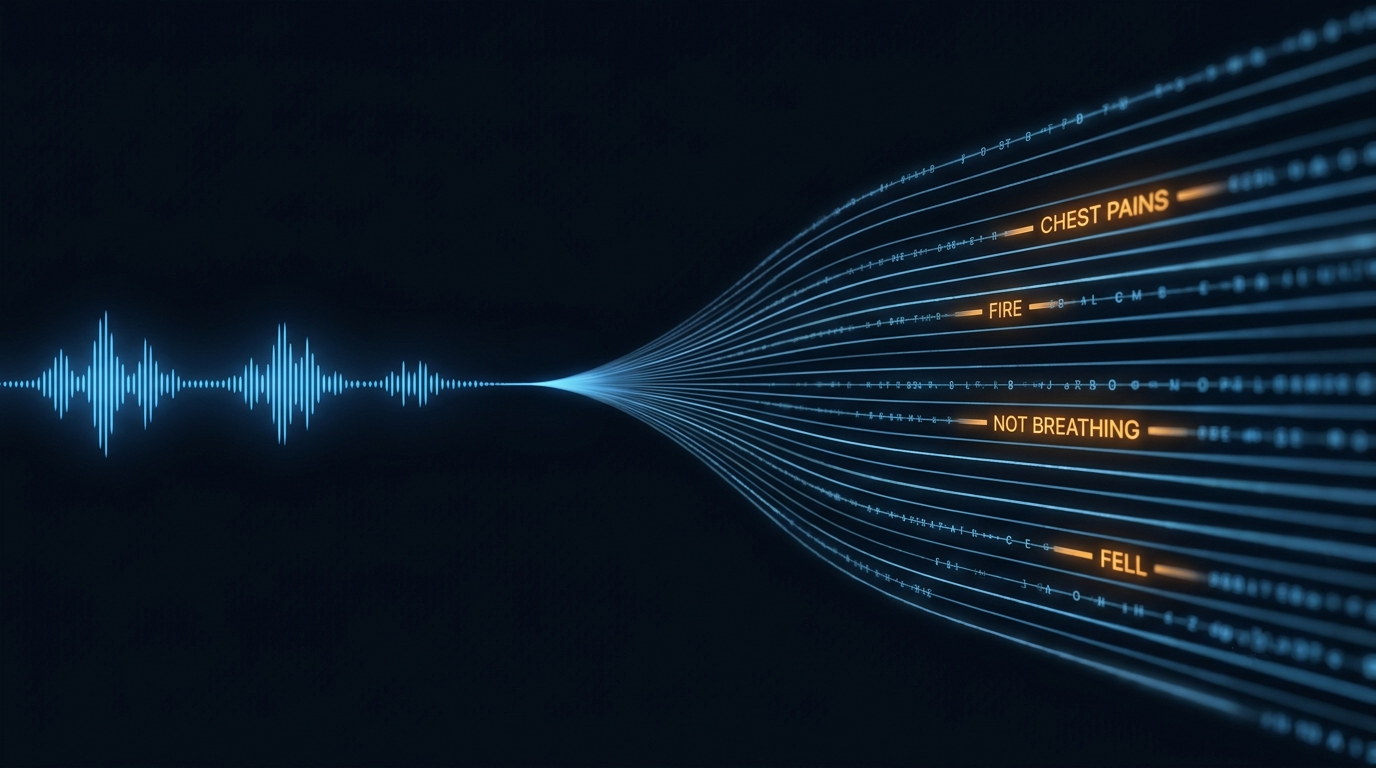
When the words on the 911 call are captured and surfaced as the call is happening, the on-site responder stops guessing. They learn it’s a cardiac event and not a slip, that the caller named the third-floor break room, that a second person has already started CPR. That understanding arrives before they do — which is the only time it actually helps. It turns the notification from a prompt to move into a briefing on what to expect.
What an informed response depends on
- Capture what’s said on the 911 call, not just the fact that one was placed.
- Surface it in real time, while the responder is still en route — not in a report afterward.
- Identify the nature of the emergency so the right people and equipment move.
- Carry the spoken location detail that a building address alone can’t provide.
- Keep updating as the call continues, because the situation rarely stays still.
- Preserve the transcript afterward, the way you’d document any life-safety event.
Where Echo fits
Echo is 9Line’s AI-powered transcription and alerting service — the layer that listens to what’s actually being said on a 911 call and surfaces it in real time, so the person responding knows what they’re walking into. It’s made possible because 9Line sits in the call path, where the emergency is described as it unfolds. Compliance gets you the alert. Echo is what turns that alert into understanding — and understanding is what turns it into a response.
See how Echo works to turn a 911 notification into an actual response.
9Line Software is the cloud-based E911 compliance platform built for Cisco Call Manager, Microsoft Teams, and BroadWorks. Echo, 9Line’s AI-powered transcription and alerting service, is made possible because 9Line sits in the call path — where safety actually gets handled.