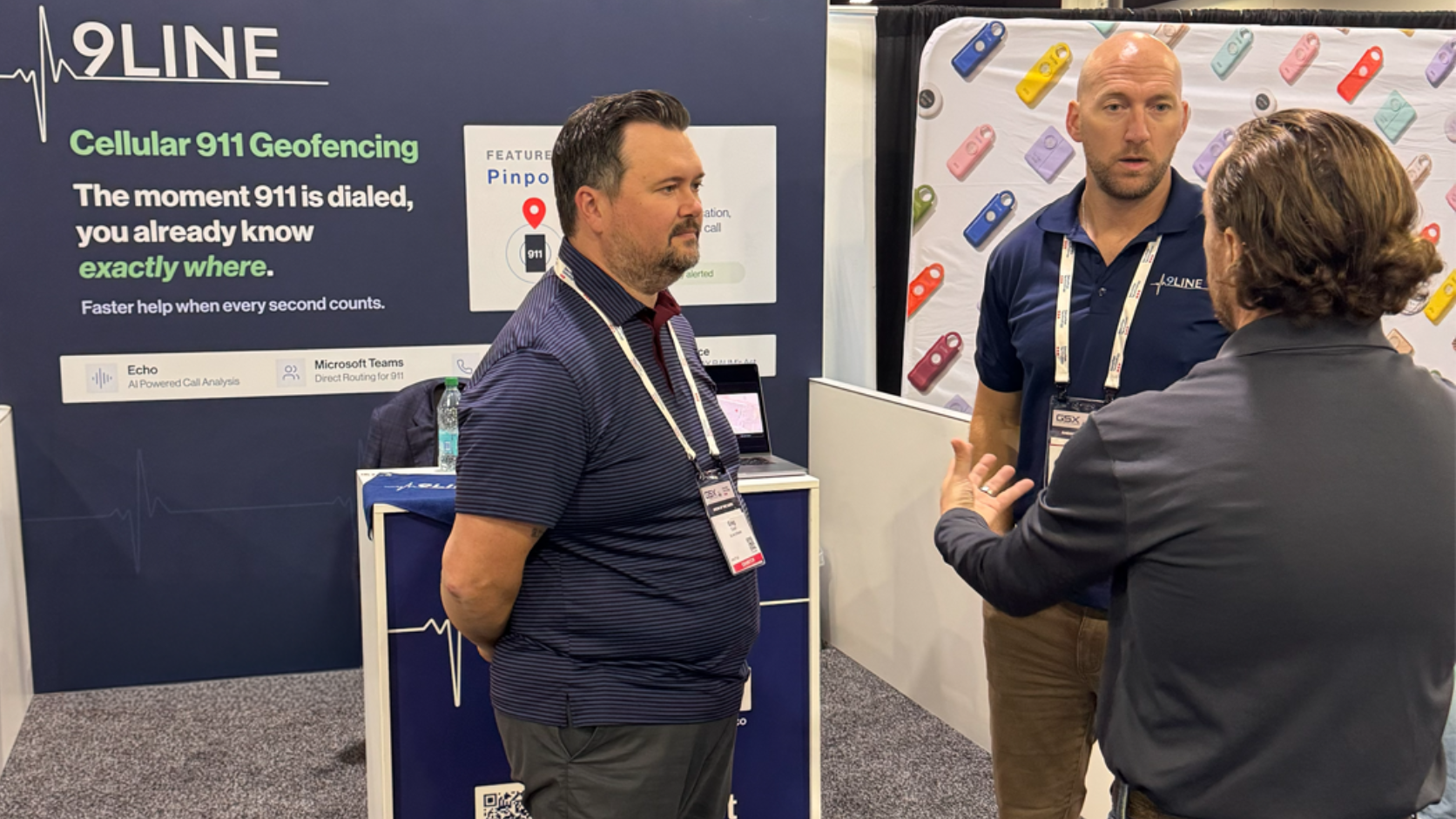
Three days on the show floor at GSX 2026 in Atlanta, and the same conversation kept happening, almost word for word, no matter which vertical we were talking to.
It usually started with us asking a simple question. A security director would walk us through their existing systems, access control, their camera coverage. All solid. Then we'd ask: if someone dials 911 from a cell phone on your property right now, how does your team find out?
Most of the time, the honest answer was some version of "after the fact, if the 911 call center happens to relay it, and even then we don't really know where." That's the gap. It's not a failure of any of the systems already in place. It's just not a problem those systems were built to solve.
Why the gap exists
The majority of 911 calls today come from cell phones, not landlines or desk phones. On a campus, hospital, or industrial site, that means most 911 activity never touches the property's own phone system at all. It happens on a personal device, and the first the security team hears about it is whatever dispatch decides to pass along, if anything.
Mass notification tools don't close this gap either, because they're solving a different problem. They're outbound: they push a message out to a campus or facility after an emergency is already known and confirmed. Pinpoint is inbound. The moment a cellular 911 call originates on your property, your team gets an alert with precise, device-level location, before anyone has even decided a notification needs to go out.
These aren't competing systems. They're sequential. Pinpoint fires first, and whatever happens next (an evacuation message, a lockdown, a dispatch of security personnel) follows from there.
Where Pinpoint fits
Pinpoint is a new integration for the 9Line unified notification app. On its own, it closes the cellular side of the gap: precise location the instant someone dials 911 from a cell phone on your property. Paired with 9Line's existing visibility into your business phone system, the two together give you complete coverage of 911 activity on site, whether the call came from a cell phone or a desk phone, in one place.
No new equipment to deploy, no changes to your existing phone system. Security and safety teams run it through the 9Line app they're likely already using.
Who this landed with
The conversations at our booth spanned higher education, healthcare, and corporate and industrial sites, and the shape of the problem looked the same everywhere. A large campus or facility means a large footprint of personal cell phones on property at any given moment, and every one of them is a potential 911 call your team currently has no visibility into.
For campus police and public safety departments, the question was response time and knowing exactly where to send people. For hospital security teams, it was tying cellular 911 activity into an already complex environment of patients, staff, and visitors. For corporate and industrial sites, it was closing a gap that existing access control and camera systems were never designed to cover.
If you weren't able to make it to GSX
The reaction we heard most often at the booth was some version of "wait, this is possible?" If that's your reaction too, we'd like to show you. If you run security or safety for a campus, hospital, or corporate facility and this is a gap you recognize, reach out to us directly at [email protected], or schedule a time with us via the Contact page.