
Your organization has deployed a 911 calling solution. Phones dial 911 directly. Internal security gets notified. Location data flows to the 911 center. You've checked the boxes for Kari's Law and RAY BAUM's Act.
But here's the question compliance checklists don't ask: do you know what's being said on that 911 call while it's still happening?
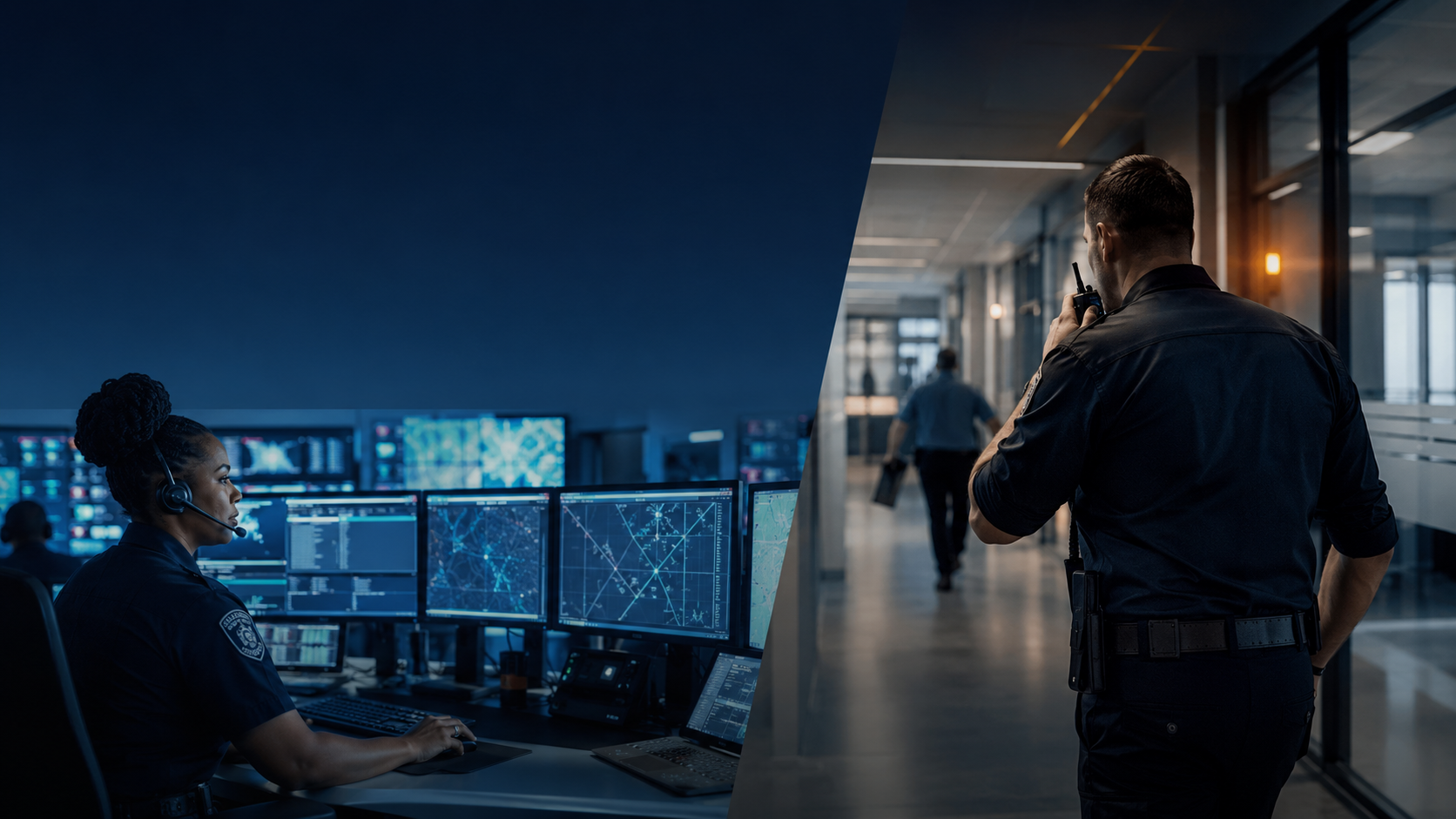
When someone dials 911 from your building, your security team knows a call was placed and maybe which floor it came from. They don't know whether someone said “active shooter” or “I need an ambulance for a sprained ankle.” Those situations call for very different responses, and without real-time context from the call your team is responding blind in the most critical moments.
This article explains how live call context and keyword alerting work, walks through five scenarios where they change the response, and covers what to look for in a solution.
The gap between compliance and preparedness
Kari's Law and RAY BAUM's Act set the floor. Multi-line telephone systems must support direct 911 dialing without a prefix, send an internal notification when 911 is dialed, and convey a dispatchable location to the 911 center so first responders know where to go.
Those requirements save lives. But they address the mechanics of reaching 911, not the information needed to respond well. Consider the timeline of a typical workplace emergency:
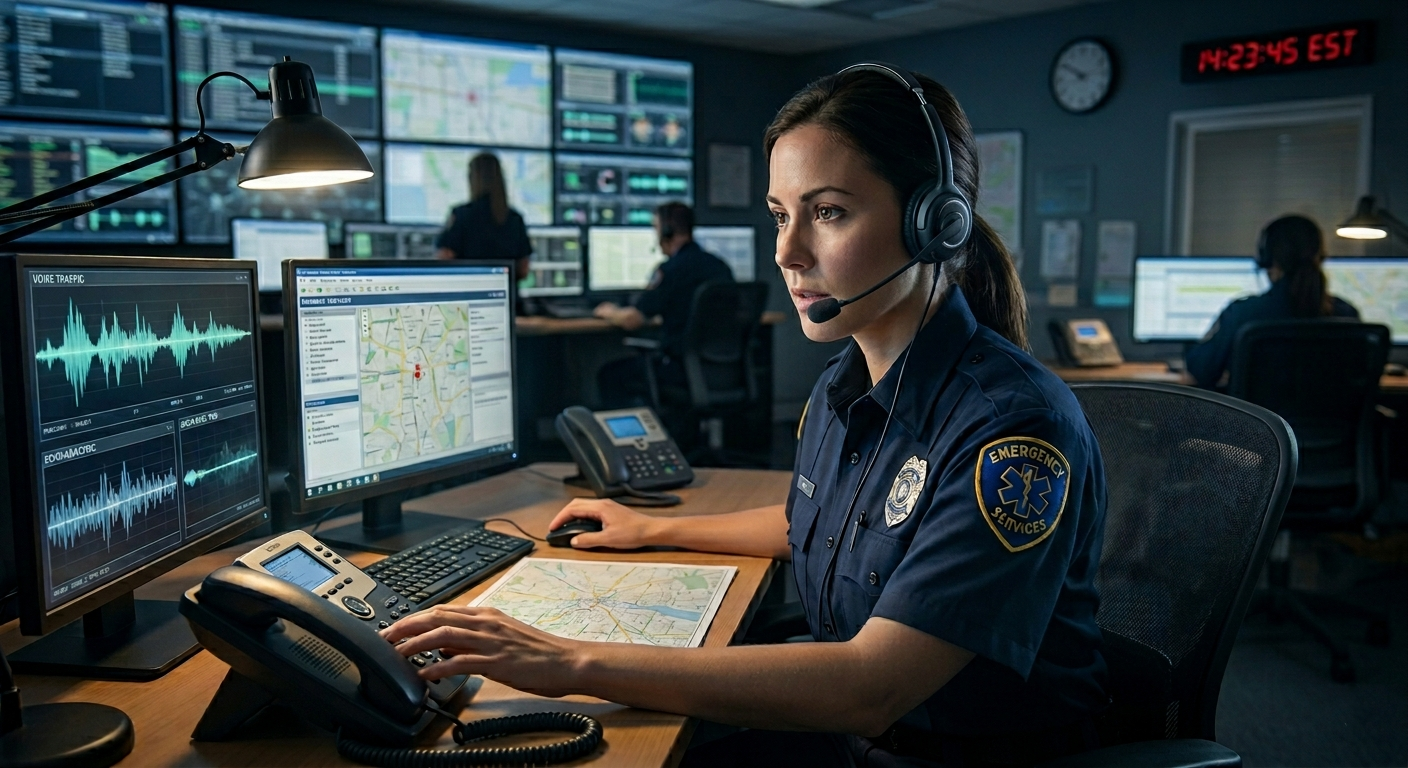
The gap between what the caller tells the dispatcher and what your security team knows is the problem real-time context solves. With live 911 call monitoring, your team gets an alert the moment high-risk words are spoken, while the call is still active.
How real-time context on 911 calls works
Real-time call context integrates at the network layer, typically at the session border controller (SBC), and follows outbound 911 calls as they happen. It works in three stages.
1. Following the live call
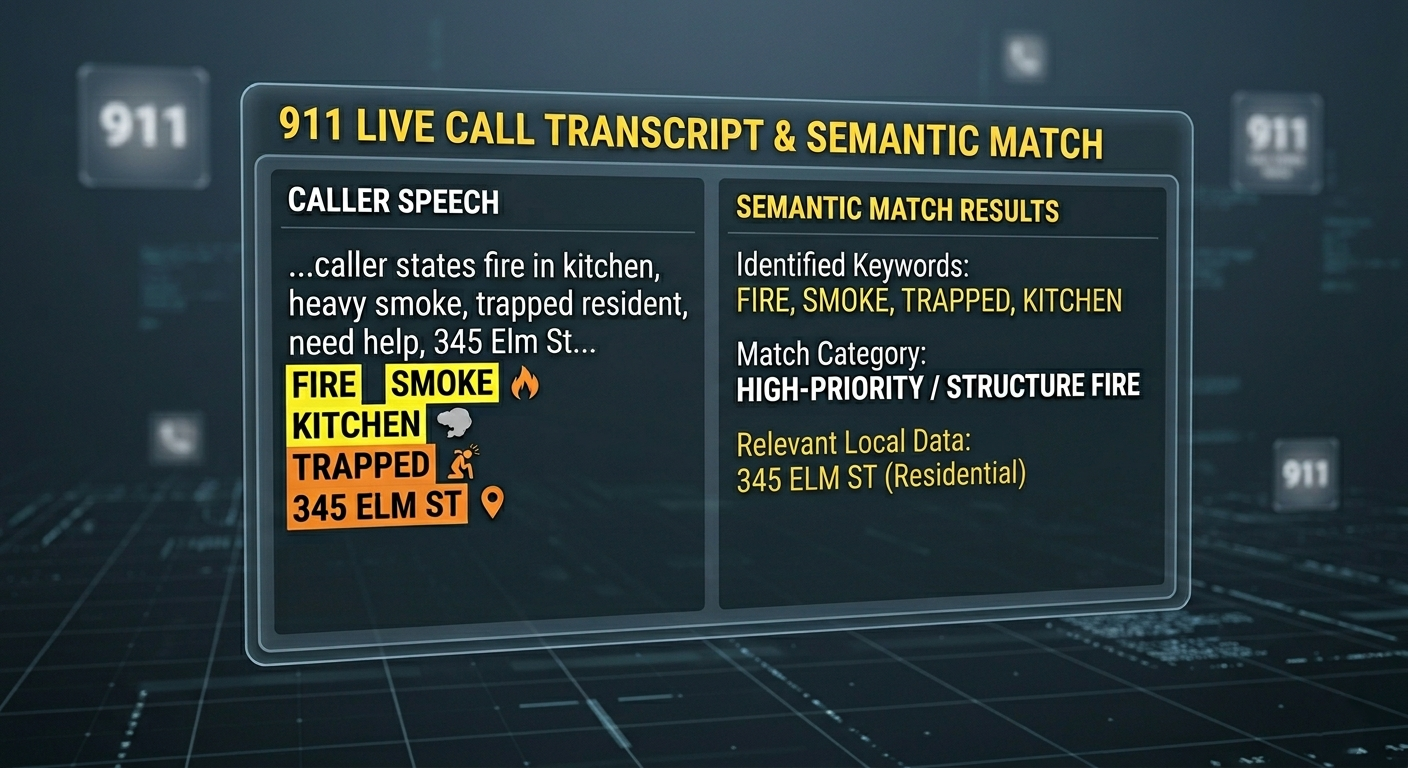
As soon as a 911 call connects, AI follows the call audio and works out what the caller is describing. It runs for the full call and covers both sides of the conversation. It isn't post-call analysis or a recording you review later. It's a live read on what is being said right now. Echo records and transcribes the call, and both the recording and the transcript are saved for after-action review.
2. Keyword detection and semantic analysis
The live call feeds a keyword engine that scans for configurable high-risk phrases. Each organization defines its own list based on its risks: “active shooter,” “explosion,” “heart attack,” “chemical spill,” or any term relevant to its environment.
AI-powered semantic analysis adds contextual matches on top of your keyword list, so if a caller says “someone collapsed and isn't breathing,” the system recognizes a medical emergency even though no one said “heart attack.” Every 911 call still triggers the Kari's Law notification. Semantic analysis makes sure the context on that call isn't lost just because the caller never used the expected words.
3. Instant alert delivery
When a match fires, designated personnel get an alert with the emergency category, the matched keywords, a transcript of the call, a link to the call recording, a timestamp and confidence score, and the caller's location from the existing E911 system. Security teams receive it within seconds of the words being spoken, not minutes later and not after someone reviews a recording. The AI flags the call, and your people read the transcript or listen to the recording and decide how to respond, so a human stays in the loop.
Five scenarios where live context changes the response
Basic 911 notification tells your team where. Real-time context tells them what. Here is how that difference plays out.
Scenario 1: Active threat
Basic notification: 911 call placed, Building B, Room 118, 2:47 PM.
With Echo: SECURITY, Building B, Room 118, 2:47 PM. Keywords: weapon, threatening, hiding. Transcript: “...there's a man with a knife... he's threatening people... we're hiding in the conference room...” Recording: link to the call.
With basic notification, the team approaches Room 118 like any other 911 call, possibly expecting a medical issue or a false alarm. With Echo, they know before arriving that a weapon is involved, several people are at risk, and victims are hiding, which means the threat may be moving. They don't approach alone. They coordinate, start lockdown procedures for nearby areas, and brief law enforcement with specifics: knife, multiple people threatened, victims sheltering in the conference room.
Scenario 2: Cardiac emergency vs. other medical calls
Basic notification: 911 call placed, Building A, Floor 3, cubicle area, 10:22 AM.
With Echo: MEDICAL, Building A, Floor 3, cubicle area, 10:22 AM. Keywords: chest pain, not breathing, collapsed. Transcript: “...he grabbed his chest and just fell... he's not breathing... I don't think he has a pulse...” Recording: link to the call.
Medical calls aren't all the same. A cardiac arrest needs immediate intervention. A broken ankle is serious but not as time-critical. With basic notification, the team grabs a first aid kit and works out what's needed on arrival. With Echo, they know it's cardiac, grab the AED on the way, move fast, and send someone to meet EMS at the entrance and guide them straight to the patient.
Scenario 3: Fire vs. false alarm
Basic notification: 911 call placed, Building C, break room, 11:45 AM.
With Echo: FIRE, Building C, break room, 11:45 AM. Keywords: smoke, fire, burning. Transcript: “...there's smoke coming from the microwave... something's on fire... it's spreading to the cabinets...” Recording: link to the call.
A full evacuation is disruptive, and many break room calls turn out to be minor. With basic notification, the team has to arrive and assess before deciding, while a real fire keeps growing. With Echo, they know fire is spreading before they arrive. They can start evacuation, bring extinguishers, and have facilities shut down HVAC in that zone to limit smoke. When it's only burnt food, the transcript makes that clear too, and the team responds without overreacting.
Scenario 4: Mental health crisis
Basic notification: 911 call placed, Building D, Floor 2 restroom, 3:15 PM.
With Echo: MEDICAL/WELFARE, Building D, Floor 2 restroom, 3:15 PM. Keywords: hurt themselves, blood, scared. Transcript: “...I found someone in the bathroom... I think they hurt themselves... there's blood... they're conscious but not responding to me...” Recording: link to the call.
Someone in crisis needs calm, trained intervention, not a tactical response that could escalate things. Without context, a team may arrive with an urgency that feels threatening. With Echo, they approach calmly, include someone with crisis intervention training, bring appropriate first aid supplies, and give the person space rather than crowding the scene.
Scenario 5: Multi-victim incident
Basic notification: 911 call placed, parking garage, Level 2, 5:30 PM.
With Echo: ACCIDENT, parking garage, Level 2, 5:30 PM. Keywords: accident, multiple people, trapped. Transcript: “...a car hit several people... at least three are down... one is trapped under the vehicle... we need ambulances...” Recording: link to the call.
One officer can help with a single injury. Three or more victims overwhelm any solo responder. With basic notification, whoever is available goes, finds a mass casualty scene, and calls for backup that is now minutes away. With Echo, multiple responders go from the start, someone directs EMS from the garage entrance, staff prepare for worried coworkers and family, and leadership knows this is a significant incident.
What changes in every scenario
- Equipment. The right tools are in hand before arrival: an AED for cardiac, an extinguisher for fire.
- Approach. The team's posture fits the emergency: tactical for threats, calm for a mental health crisis, urgent for cardiac.
- Scale. The right number of responders goes from the start instead of being adjusted after arrival.
- Coordination. Police, fire, and EMS get briefed with real information, not just a location.
- Speed. Decisions that would wait for arrival happen on the way.
The same applies to other calls. Keywords like “chemical” and “fumes” let facilities isolate HVAC while security coordinates evacuation. Organizations with several campuses get the same live view of 911 call content from a site 200 miles away as from the building next door. And saved recordings and transcripts give a precise record of what was communicated, useful for after-action reviews, compliance audits, and insurance claims.
The regulatory picture
Kari's Law and RAY BAUM's Act don't require live call context. They require direct dialing, on-site notification, and dispatchable location. Real-time context is something organizations add on top of compliance, for operational reasons rather than legal ones. A few things are still worth weighing:
- Duty of care. After an emergency, organizations may be asked what they knew and how they responded. A record of what was said on the call, and when your team learned it, can help answer those questions.
- State rules. Federal law is the floor. Many states have their own MLTS 911 laws, so check the requirements where you operate.
- Attention on 911 is growing. In April 2026 the House passed the Kari's Law Reporting Act, which would have the FCC report on how well phone system manufacturers and vendors are complying with Kari's Law. It isn't law yet, but it's a sign Congress is watching whether the rules work.
What to look for in a real-time call context solution
- Native platform integration. It should work with your existing E911 and phone system at the SBC level, using the call flow you already have, with no separate appliance, extra hardware, or parallel audio path.
- Semantic analysis alongside keywords. Callers under stress say “he fell and his face is turning blue,” not “cardiac arrest.” Semantic analysis catches those matches, with configurable confidence thresholds to keep false positives manageable.
- Configurable keyword libraries. A hospital's list differs from a manufacturing plant's or a university's. Administrators should be able to update categories and terms without vendor involvement.
- Access controls and secure storage. Saved recordings and transcripts contain sensitive information. Look for role-based access, encrypted storage, configurable retention, and a secure portal that doesn't give blanket access to raw audio or unrelated incidents.
- Minimal deployment footprint. If it needs new hardware or major network changes, adoption stalls. The best solutions are software-defined, run alongside your existing SBC, and switch on as a feature, not a project.
Frequently asked questions
What is real-time 911 call context?
Real-time 911 call context means understanding what a caller is describing while the 911 call is still in progress, so an organization's security team knows what is happening instead of only knowing that a call was placed. It typically runs at the session border controller (SBC) and follows both sides of the call for its full duration. Echo records and transcribes the call, and both the recording and the transcript are saved for after-action review.
How does real-time 911 call context alert a security team?
Real-time 911 call context feeds a keyword engine that scans for configurable high-risk phrases and uses semantic analysis to catch descriptions like “someone collapsed and isn't breathing.” When a match fires, designated personnel get an alert with the emergency category, matched keywords, a transcript of the call, a link to the call recording, a timestamp, and the caller's location within seconds. The AI flags the call, and your people review the transcript and recording and decide the response, so a human stays in the loop.
Do Kari's Law or RAY BAUM's Act require real-time call context?
No. Kari's Law and RAY BAUM's Act require direct 911 dialing, on-site notification, and dispatchable location. Organizations add real-time call context on top of compliance for operational reasons, such as duty of care and post-incident documentation.
What changes when a security team knows what a 911 caller is describing?
When a security team knows what a 911 caller is describing, the response matches the emergency from the start. Responders bring the right equipment, such as an AED for a cardiac arrest, take the right approach for a threat or a mental health crisis, send enough people for a multi-victim incident, and brief police, fire, and EMS with real details.
What should organizations look for in a real-time 911 call context solution?
A real-time 911 call context solution should integrate natively at the SBC without extra hardware or a parallel audio path, use semantic analysis alongside configurable keywords, let administrators edit keyword libraries themselves, protect saved recordings and transcripts with role-based access, encrypted storage, and retention policies, and deploy as a feature rather than a project.
Moving beyond the compliance checkbox
Compliance with Kari's Law and RAY BAUM's Act is the starting line. Organizations that stop at direct dialing, internal notification, and location delivery meet the letter of the law but leave critical response information on the table.
Real-time call context and keyword alerting close the gap between knowing that a 911 call was made and knowing what is actually happening. That can be the difference between a coordinated response and a scramble. Echo runs natively in 9Line with no additional hardware, for organizations on Cisco Unified CM, Cisco Emergency Responder, Microsoft Teams Direct Routing, and Cisco BroadWorks.
See Echo on a live call
Echo works with Cisco Unified CM, Cisco Emergency Responder, Microsoft Teams Direct Routing and Cisco BroadWorks, with no software to install.
See how Pinpoint works on your property
9Line Pinpoint draws geofences around your buildings, detects cellular 911 calls made inside them and tells your on-site team which building the call came from.
Make your phone system 911 compliant
9Line Dispatch sends a dispatchable location with every 911 call and alerts on-site staff the moment 911 is dialed, for Microsoft Teams, Cisco UCM, Cisco BroadWorks and Cisco Emergency Responder.
Talk to a 911 compliance specialist
Tell us about your property and phone system, and we will show you where 9Line Pinpoint and 9Line Dispatch fit.